

Yokogawa
6841]
![YOKOGAWA [TYO:6841]: Unlocking the Potential of Operations with IT/OT Convergence](/company_logos/1xnl4222-72.jpg "YOKOGAWA [TYO:6841]: Unlocking the Potential of Operations with IT/OT Convergence")
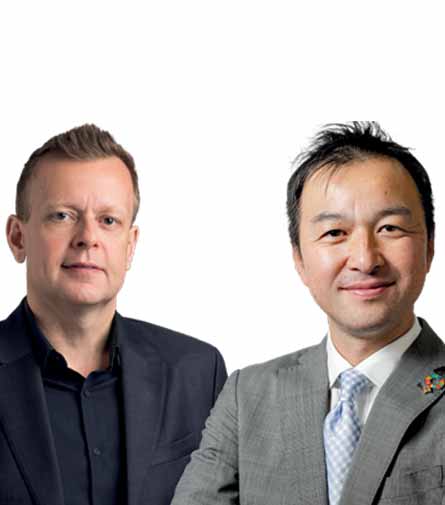 Morten Bech, President & CEO, Yokogawa Votiva Solutions and Akihiko Sato, Head of global ERP business, Yokogawa Electric Corporation
Yokogawa [TYO:6841] helps companies facilitate this joint creation of value through intelligent IT/OT convergence. As the torchbearer of Industry 4.0, it enables a seamless exchange of information and knowledge, empowering clients to move from disconnected or partly-connected IT and OT to a seamless IT/OT environment that ramps up their asset performance and productivity.
A smooth transition to smart manufacturing is made possible by Yokogawa’s end-to-end solutions that enable companies to increase business efficiencies and accelerate their digital transformation and sustainability goals. Clients from various industries, including energy, mining, agriculture, chemicals, pharma, healthcare, and food, depend on Yokogawa’s complete digitalization solutions and consulting services to implement a smart manufacturing suite specific to their domain.
“The full potential of smart manufacturing can be unlocked by sustainably facilitating IT/OT convergence without overwhelming operational workflows. It is not about implementing a full-scale digital infrastructure, but creating a well-planned transformation roadmap and digitalizing the workflows one step at a time with seamlessly-connected solutions,” says Akihiko Sato, head of global ERP business at Yokogawa Electric Corporation.
Accelerating Business Performance with Smart ERP Solutions
The highly innovative and scalable ERP platform in Yokogawa’s smart manufacturing portfolio autonomously runs all key business operations and financial workflows, enabling seamless global governance and compliance with regulations. The platform is an integral part of Yokogawa’s strategic framework under the industrial automation to industrial autonomy (IA2IA) and smart manufacturing umbrella.
“The ultimate goal for any business is to achieve operational efficiency and reduce business expenditure by embracing innovation. Our ERP gives businesses complete visibility and control over their workflows,” says Sato.
Yokogawa’s ERP solution is especially beneficial for growing businesses setting out on their digital transformation (DX) journey. Its comprehensive functionalities, ranging from advanced revenue management and billing to complete manufacturing inventory, supply chain, and warehouse management, enable clients to streamline all critical processes and shift their focus on business expansion while adhering to laws and regulations like HACCP and GMP.
The integration of Yokogawa’s Smart Manufacturing solutions with Microsoft Dynamics 365 further translates to enhanced connectivity between a client’s financial and supply chain processes.
They gain access to a wide range of Microsoft’s business intelligence apps, which turn the data generated from its IoT sensors into useful insights that can drive business operations.
In addition, customer engagement can be improved by connecting Salesforce to Yokogawa’s Smart Manufacturing platform. Standardized data exchange between software ensures better collaboration between various departments and smoother customer service.
On a management level, a unified view of diverse departmental operations facilitates rapid decision-making.
The strong growth and proven digital transformation (DX) capabilities of Yokogawa's ERP solution has enabled companies across Japan to achieve ROI. Currently, Yokogawa’s Microsoft Dynamics 365-integrated ERP supports companies all over the world.
ERP is just one component of Yokogawa’s end-to-end smart manufacturing portfolio. Other solutions include supply chain optimization, operational risk management, connected intelligence, enterprise business operation, cybersecurity management, energy management, and carbon management. With these solutions seamlessly interlinked, clients can bridge the siloes in their organizations, achieving unparalleled operational efficiency.
Bolstering Smart Manufacturing with Votiva
The recent acquisition of Votiva Singapore, an IT consultancy providing ERP and CRM implementation services, enables Yokogawa to provide consulting, implementation, and technical support services for its assets in Southeast Asia. Since its inception, Votiva has been operating in five Southeast Asian countries. It specializes in distributing and implementing Microsoft Dynamics ERP and CRM, Microsoft Dynamics ERP for Retail, and Dynamics 365 Cloud, with a track record of more than 400 Microsoft Dynamics implementation projects in various industries in the world.
“As ERP systems are at the core of Yokogawa’s solutions, the industry knowledge, know-how, and expertise brought in by Votiva will boost our consulting offerings, enabling us to assist clients in streamlining the management of all their business activities, including factory operations, at the enterprise level,” says Morten Bech, president and CEO of Yokogawa Votiva Solutions (Votiva).
A recognized leader in DX, Votiva will continue to bolster its quality solutions and customer services. Its holistic consulting services will play a crucial role in creating sustainable DX roadmaps and achieving client goals within short periods. Leveraging the extensive ERP expertise and resources of its parent company, Votiva will scale its activities in Southeast Asia, providing sensor and control systems that support factory operations along with IT solutions that bolster problem-solving at the management level.
A Meticulous Onboarding Approach
A large team of consultants allows Yokogawa to identify the seemingly invisible pain points of clients. A pre-feasibility study measures the gap between the existing system and the ideal smart manufacturing infrastructure. Yokogawa follows a flexible formula imbued with industry best practices to create a sustainable road map and achieve the final goal of complete autonomy.
Although each client engagement varies, the methodology is underpinned by the Smart Industry Readiness Index (SIRI) framework developed by the Singapore Economic Development Board (EDB) in collaboration with a network of leading technology companies, consulting firms, industry leaders, and academic institutions. The SIRI framework is extensively leveraged in Singapore, and globally through the World Economic Forum (WEF), to start, scale, and sustain businesses. The Industry 4.0-based assessment approach is helping Yokogawa pen the perfect DX roadmap for its clients.
The SIRI framework has three layers—process, technology, and organization—which are the building blocks of Industry 4.0. The index breaks down the complex Industry 4.0 concept into an easily digestible roadmap for companies of all sizes. Based on the index, Yokogawa begins DX across all three layers. It integrates processes across operations, supply chain, and product lifecycle.
The strong growth and proven digital transformation (DX) capabilities of Yokogawa's ERP solution has enabled companies across Japan to achieve ROI. Currently, Yokogawa’s Microsoft Dynamics 365-integrated ERP supports companies all over the world.
ERP is just one component of Yokogawa’s end-to-end smart manufacturing portfolio. Other solutions include supply chain optimization, operational risk management, connected intelligence, enterprise business operation, cybersecurity management, energy management, and carbon management. With these solutions seamlessly interlinked, clients can bridge the siloes in their organizations, achieving unparalleled operational efficiency.
Bolstering Smart Manufacturing with Votiva
The recent acquisition of Votiva Singapore, an IT consultancy providing ERP and CRM implementation services, enables Yokogawa to provide consulting, implementation, and technical support services for its assets in Southeast Asia. Since its inception, Votiva has been operating in five Southeast Asian countries. It specializes in distributing and implementing Microsoft Dynamics ERP and CRM, Microsoft Dynamics ERP for Retail, and Dynamics 365 Cloud, with a track record of more than 400 Microsoft Dynamics implementation projects in various industries in the world.
“As ERP systems are at the core of Yokogawa’s solutions, the industry knowledge, know-how, and expertise brought in by Votiva will boost our consulting offerings, enabling us to assist clients in streamlining the management of all their business activities, including factory operations, at the enterprise level,” says Morten Bech, president and CEO of Yokogawa Votiva Solutions (Votiva).
A recognized leader in DX, Votiva will continue to bolster its quality solutions and customer services. Its holistic consulting services will play a crucial role in creating sustainable DX roadmaps and achieving client goals within short periods. Leveraging the extensive ERP expertise and resources of its parent company, Votiva will scale its activities in Southeast Asia, providing sensor and control systems that support factory operations along with IT solutions that bolster problem-solving at the management level.
A Meticulous Onboarding Approach
A large team of consultants allows Yokogawa to identify the seemingly invisible pain points of clients. A pre-feasibility study measures the gap between the existing system and the ideal smart manufacturing infrastructure. Yokogawa follows a flexible formula imbued with industry best practices to create a sustainable road map and achieve the final goal of complete autonomy.
The highly innovative and scalable ERP platform in Yokogawa’s smart manufacturing portfolio autonomously runs all key business operations and financial workflows, enabling seamless global governance and compliance with regulations
Although each client engagement varies, the methodology is underpinned by the Smart Industry Readiness Index (SIRI) framework developed by the Singapore Economic Development Board (EDB) in collaboration with a network of leading technology companies, consulting firms, industry leaders, and academic institutions. The SIRI framework is extensively leveraged in Singapore, and globally through the World Economic Forum (WEF), to start, scale, and sustain businesses. The Industry 4.0-based assessment approach is helping Yokogawa pen the perfect DX roadmap for its clients.
The SIRI framework has three layers—process, technology, and organization—which are the building blocks of Industry 4.0. The index breaks down the complex Industry 4.0 concept into an easily digestible roadmap for companies of all sizes. Based on the index, Yokogawa begins DX across all three layers. It integrates processes across operations, supply chain, and product lifecycle.
The client facility is given digital muscle (automation), connectivity (nervous system), and intelligence (brain) through technology, which allow it to become autonomous. On the organizational layer, talent readiness, structure, and management are streamlined through comprehensive consulting.
Based on the index, Yokogawa begins DX across all three layers. It integrates processes across operations, supply chain, and product lifecycle. The client facility is given digital muscle (automation), connectivity (nervous system), and intelligence (brain) through technology, which allow it to become autonomous. On the organizational layer, talent readiness, structure, and management are streamlined through comprehensive consulting.
Being the number one assessor of the SIRI framework, Yokogawa is undoubtedly the right choice for clients to gain a deep understanding of their company’s status quo and implement the solutions they need to facilitate a seamless DX process.
Pushing the Boundaries of Smart Manufacturing
Currently, Yokogawa’s smart manufacturing solutions power the DX journey of many companies worldwide. A factory operating in Indonesia for 40 years, after adopting Yokogawa’s ERP solution, was able to enhance their operational efficiency and data management. Yokogawa’s extensive industry knowledge and expertise secured the customer’s trust and enabled them to achieve a smooth onboarding. They went live with Yokogawa ERP in 2022, and have since boosted their productivity to new levels.
Yokogawa stays connected with a client even after product implementation. Through its after-sales service, it consistently supports business operations, providing on-site repairs, regular inspections, pickup repairs, and call center services. All these services are managed smoothly, with Yokogawa’s personnel staying in touch with clients and solving their issues as quickly as possible.
Votiva is becoming a preferred distributor and implementer of ERP across multiple countries beyond APAC. Having won the Microsoft Dynamics 365 ERP Partners of the Year award for the tenth time, it is anticipating rapid expansion beyond Japan.
“We will help any business organization ready to embark on their DX journey,” says Morten Bech. “The pandemic was a wake-up call for many companies. It has highlighted the need for operational autonomy, and this is the time to implement smart manufacturing solutions.”
Especially with the rise in the gig economy, where the labor market is heavily reliant on temporary and part-time positions filled by independent contractors, Yokogawa’s cloud-based solutions are winning. It is empowering clients to plug into the global talent pool and onboard the best candidates while enabling workforces to work from any location.
With over 100 years of experience under its belt, Yokogawa is working toward building a sustainable society with more than 17,000 employees in partnership with a global network of 122 companies across 61 countries. Driven by the sustainability goals of net-zero emissions, workforce wellbeing, and circular economy, Yokogawa is on the path to achieving its mission in the business world and empowering clients to do the same.
Based on the index, Yokogawa begins DX across all three layers. It integrates processes across operations, supply chain, and product lifecycle. The client facility is given digital muscle (automation), connectivity (nervous system), and intelligence (brain) through technology, which allow it to become autonomous. On the organizational layer, talent readiness, structure, and management are streamlined through comprehensive consulting.
Being the number one assessor of the SIRI framework, Yokogawa is undoubtedly the right choice for clients to gain a deep understanding of their company’s status quo and implement the solutions they need to facilitate a seamless DX process.
-
As ERP systems are at the core of Yokogawa’s solutions, the industry knowledge, know-how, and expertise brought in by Votiva will boost our consulting offerings, enabling us to assist clients in streamlining the management of all their business activities, including factory operations, at the enterprise level
Pushing the Boundaries of Smart Manufacturing
Currently, Yokogawa’s smart manufacturing solutions power the DX journey of many companies worldwide. A factory operating in Indonesia for 40 years, after adopting Yokogawa’s ERP solution, was able to enhance their operational efficiency and data management. Yokogawa’s extensive industry knowledge and expertise secured the customer’s trust and enabled them to achieve a smooth onboarding. They went live with Yokogawa ERP in 2022, and have since boosted their productivity to new levels.
Yokogawa stays connected with a client even after product implementation. Through its after-sales service, it consistently supports business operations, providing on-site repairs, regular inspections, pickup repairs, and call center services. All these services are managed smoothly, with Yokogawa’s personnel staying in touch with clients and solving their issues as quickly as possible.
Votiva is becoming a preferred distributor and implementer of ERP across multiple countries beyond APAC. Having won the Microsoft Dynamics 365 ERP Partners of the Year award for the tenth time, it is anticipating rapid expansion beyond Japan.
“We will help any business organization ready to embark on their DX journey,” says Morten Bech. “The pandemic was a wake-up call for many companies. It has highlighted the need for operational autonomy, and this is the time to implement smart manufacturing solutions.”
Especially with the rise in the gig economy, where the labor market is heavily reliant on temporary and part-time positions filled by independent contractors, Yokogawa’s cloud-based solutions are winning. It is empowering clients to plug into the global talent pool and onboard the best candidates while enabling workforces to work from any location.
With over 100 years of experience under its belt, Yokogawa is working toward building a sustainable society with more than 17,000 employees in partnership with a global network of 122 companies across 61 countries. Driven by the sustainability goals of net-zero emissions, workforce wellbeing, and circular economy, Yokogawa is on the path to achieving its mission in the business world and empowering clients to do the same.
| Share this Article: Tweet
|
Company
Yokogawa
Management
Morten Bech, President & CEO, Yokogawa Votiva Solutions and Akihiko Sato, Head of global ERP business, Yokogawa Electric Corporation
Description
Yokogawa engages in broad-ranging activities in the areas of measurement, control, and information. The industrial automation business provides vital products, services, and solutions to a diverse range of process industries including oil, chemicals, natural gas, power, iron and steel, and pulp and paper.
Yokogawa News
TECO 2030 and Yokogawa Sign Partnership and Investment Agreement for the Utilization of Hydrogen Fuel Cells in Industrial Applications
TECO 2030 and Yokogawa Sign Partnership and Investment Agreement for the Utilization of Hydrogen Fuel Cells in Industrial Applications
TECO 2030 ASA ("TECO 2030", OSE: TECO, OTCQX: TECFF, ISIN: NO0010887516) and yokogawa YElectric Corporation ("Yokogawa Electric", TOKYO: 6841) announce that they have signed a strategic partnership and investment agreement regarding the development of technology for utilizing hydrogen fuel cells in industrial applications. Under this agreement, Yokogawa Electric has invested in TECO 2030 by way of acquiring treasury shares, and the two companies will collaborate on optimizing hydrogen fuel cell technology and exploring business opportunities for distributed power sources in the maritime transportation and other industrial sectors.
Hydrogen fuel cells use an electrochemical process that combines hydrogen and oxygen to produce electrical energy and water, and are utilized as power sources in fuel cell vehicles (FCV) and stationary power supply devices. Green hydrogen and ammonia are considered promising energy carriers for the storage and transportation of renewable energy that has been produced as electricity. Fuel cells powered by green hydrogen, or hydrogen produced through green ammonia-to-hydrogen cracking technology, are more energy efficient than conventional combustion engines and don't generate nitrogen oxide (NOx), so can be used as zero-emission energy sources in a range of applications. Although adoption has been limited up to now, technology maturity and a dramatic increase in demand for hydrogen-powered marine vessels are driving expansion of the fuel cell market, and the resulting reduction in manufacturing costs is expected to in turn accelerate use in the automotive and industrial sectors as well.
TECO 2030 develops and manufactures hydrogen fuel cells, and has opened in Narvik, Norway, a gigafactory for the production of hydrogen proton exchange membrane (PEM) fuel cells and energy modules, which consist of multiple cells and auxiliary operating equipment. Production of hydrogen fuel cells is already underway, and module production is expected to start within the next few months. The production capacity will be built up over time, targeting an output capacity of 400 MW in 2025 and 1.6 GW in 2030. TECO 2030's hydrogen fuel cells employ unique technologies developed together with technology partner AVL, a forerunner in this field, enabling industry-leading energy density and performance.
Yokogawa Electric brings to this partnership decades of experience in developing core measurement, control, and information technologies for the energy, chemical, and other process industries. Yokogawa Electric and TECO 2030 see opportunities for applying this knowhow to develop technology for optimizing the operation of fuel cells, and will also explore their use as distributed energy resources in industries that have high decarbonization needs.
Tore Enger, Group CEO of TECO 2030, commented, “I am very excited to have Yokogawa on board as an investor and strategic partner for the ongoing development of TECO 2030's complete fuel cell system. I am looking forward to working together toward the common goal of a zero-emission future.”
Tsuyoshi Abe, a Yokogawa Electric senior vice president and head of the Marketing Headquarters, said, “As we mention in our whitepaper Reweave the World*, energy conversion systems are going to play an important role in the transition from the fossil fuel era to a renewable energy era. Yokogawa firmly believes that fuel cells are one of the pathways to net-zero emissions in the maritime and industrial sectors, and we are confirming this by embarking on a journey with TECO 2030 as a strategic partner for a sustainable future.”
Hydrogen fuel cells use an electrochemical process that combines hydrogen and oxygen to produce electrical energy and water, and are utilized as power sources in fuel cell vehicles (FCV) and stationary power supply devices. Green hydrogen and ammonia are considered promising energy carriers for the storage and transportation of renewable energy that has been produced as electricity. Fuel cells powered by green hydrogen, or hydrogen produced through green ammonia-to-hydrogen cracking technology, are more energy efficient than conventional combustion engines and don't generate nitrogen oxide (NOx), so can be used as zero-emission energy sources in a range of applications. Although adoption has been limited up to now, technology maturity and a dramatic increase in demand for hydrogen-powered marine vessels are driving expansion of the fuel cell market, and the resulting reduction in manufacturing costs is expected to in turn accelerate use in the automotive and industrial sectors as well.
TECO 2030 develops and manufactures hydrogen fuel cells, and has opened in Narvik, Norway, a gigafactory for the production of hydrogen proton exchange membrane (PEM) fuel cells and energy modules, which consist of multiple cells and auxiliary operating equipment. Production of hydrogen fuel cells is already underway, and module production is expected to start within the next few months. The production capacity will be built up over time, targeting an output capacity of 400 MW in 2025 and 1.6 GW in 2030. TECO 2030's hydrogen fuel cells employ unique technologies developed together with technology partner AVL, a forerunner in this field, enabling industry-leading energy density and performance.
Yokogawa Electric brings to this partnership decades of experience in developing core measurement, control, and information technologies for the energy, chemical, and other process industries. Yokogawa Electric and TECO 2030 see opportunities for applying this knowhow to develop technology for optimizing the operation of fuel cells, and will also explore their use as distributed energy resources in industries that have high decarbonization needs.
Tore Enger, Group CEO of TECO 2030, commented, “I am very excited to have Yokogawa on board as an investor and strategic partner for the ongoing development of TECO 2030's complete fuel cell system. I am looking forward to working together toward the common goal of a zero-emission future.”
Tsuyoshi Abe, a Yokogawa Electric senior vice president and head of the Marketing Headquarters, said, “As we mention in our whitepaper Reweave the World*, energy conversion systems are going to play an important role in the transition from the fossil fuel era to a renewable energy era. Yokogawa firmly believes that fuel cells are one of the pathways to net-zero emissions in the maritime and industrial sectors, and we are confirming this by embarking on a journey with TECO 2030 as a strategic partner for a sustainable future.”

Hydrogen fuel cells use an electrochemical process that combines hydrogen and oxygen to produce electrical energy and water, and are utilized as power sources in fuel cell vehicles (FCV) and stationary power supply devices. Green hydrogen and ammonia are considered promising energy carriers for the storage and transportation of renewable energy that has been produced as electricity. Fuel cells powered by green hydrogen, or hydrogen produced through green ammonia-to-hydrogen cracking technology, are more energy efficient than conventional combustion engines and don't generate nitrogen oxide (NOx), so can be used as zero-emission energy sources in a range of applications. Although adoption has been limited up to now, technology maturity and a dramatic increase in demand for hydrogen-powered marine vessels are driving expansion of the fuel cell market, and the resulting reduction in manufacturing costs is expected to in turn accelerate use in the automotive and industrial sectors as well.
TECO 2030 develops and manufactures hydrogen fuel cells, and has opened in Narvik, Norway, a gigafactory for the production of hydrogen proton exchange membrane (PEM) fuel cells and energy modules, which consist of multiple cells and auxiliary operating equipment. Production of hydrogen fuel cells is already underway, and module production is expected to start within the next few months. The production capacity will be built up over time, targeting an output capacity of 400 MW in 2025 and 1.6 GW in 2030. TECO 2030's hydrogen fuel cells employ unique technologies developed together with technology partner AVL, a forerunner in this field, enabling industry-leading energy density and performance.
Yokogawa Electric brings to this partnership decades of experience in developing core measurement, control, and information technologies for the energy, chemical, and other process industries. Yokogawa Electric and TECO 2030 see opportunities for applying this knowhow to develop technology for optimizing the operation of fuel cells, and will also explore their use as distributed energy resources in industries that have high decarbonization needs.
Tore Enger, Group CEO of TECO 2030, commented, “I am very excited to have Yokogawa on board as an investor and strategic partner for the ongoing development of TECO 2030's complete fuel cell system. I am looking forward to working together toward the common goal of a zero-emission future.”
Tsuyoshi Abe, a Yokogawa Electric senior vice president and head of the Marketing Headquarters, said, “As we mention in our whitepaper Reweave the World*, energy conversion systems are going to play an important role in the transition from the fossil fuel era to a renewable energy era. Yokogawa firmly believes that fuel cells are one of the pathways to net-zero emissions in the maritime and industrial sectors, and we are confirming this by embarking on a journey with TECO 2030 as a strategic partner for a sustainable future.”