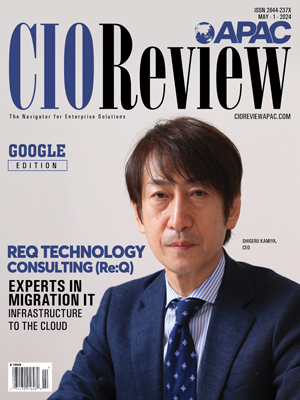
Req Technology Consulting (Re:Q)
Q)

 Shigeru Kamiya, CEO
Re:Q's cloud solutions epitomize this approach, offering businesses the agility to respond to market fluctuations and drive innovation by facilitating access to data and applications anytime and anywhere.
With expertise in addressing the non-functional requisites of mission-critical systems, Re:Q distinguishes itself by navigating clients through IT infrastructure migration to cloud environments. The company's forte lies in developing hybrid clouds, meticulously managing critical infrastructure components such as servers, middleware, networks, and databases. These elements are indispensable in sculpting an efficient and cloud-compatible contemporary system infrastructure.
Re:Q ensures client system infrastructure perfectly aligns with their business strategies. This commitment is exemplified through the selection of technologies that are cost-effective, scalable, and readily accessible. The journey toward achieving this alignment commences with a comprehensive delineation of the systemization framework, setting the stage for a methodical infrastructure design process.
The cornerstone of its approach is a collaborative strategy fostering teamwork to confront challenges and diminish risks adeptly. This guarantees the provision of superior services within favorable timelines, underscoring Re:Q's dedication to excellence and its pledge to empower customers.
Reliable Partners for the Customers
Re:Q, a pivotal force in the system infrastructure construction, operates at the confluence of vendors and users to optimize the efficiency and quality of system development whilst driving innovation.
Kamiya emphasizes a discerning approach to cloud migration. “We do not believe all systems should be moved to the cloud.”
The company navigates the decision-making process, identifying which systems and functions thrive in a cloud environment versus those better suited for on-premise deployment. This is crafted to align with each client's specific requirements, addressing key concerns such as system performance issues and compliance with stringent security protocols.
The cornerstone of Re:Q's success lies in its team of adept engineers, whose approach is characterized by a deep empathy and a comprehensive understanding of unique client challenges. They excel in orchestrating the development of modern system infrastructures, adeptly managing the intricate web of technological domains and mitigating risks related to cross-domain interactions and iterative design processes.
Re:Q's engineering prowess ensures the delivery of robust and efficient system constructions, embodying the company's commitment to excellence and its role as a catalyst for innovation.
Structured Steps to Implement the Google Cloud Platform
Re:Q has developed a meticulous approach to implementing the Google Cloud Platform (GCP), tailored to client needs.
This process begins with the "Hearing Phase," where the team interviews clients to understand their current systems. This paves the way for a successful migration by identifying the most effective methods and scope for transitioning to GCP.
Following this, Re:Q moves into the "Proposal and Estimate" stage, leveraging the insights gained to craft detailed proposals and estimates. This phase sets clear expectations and outlines the specific requirements for a seamless GCP integration. The team designs the GCP environment, ensuring it is customized to include essential infrastructure operations such as system monitoring and authentication, directly addressing the client's operational needs.
The "Migration Work" phase represents the core of Re:Q's services, where the team's expertise shines. They manage the complex transition of the client's system from an on-premises infrastructure to GCP's virtual environment. Their comprehensive experience in GCP-specific and on-premises systems guarantees an efficient and effective migration.
Lastly, Re:Q's commitment to clients extends beyond migration with its "Operational Support" service. The company offers ongoing support to address technical inquiries, ensuring clients receive continuous assistance throughout their GCP journey.
Resolving Issues about Migrating a System from on-premises
When Re:Q transitions a system from on-premises infrastructure to the cloud, its methodology is marked by a rigorous and strategic approach, beginning with an essential Proof of Concept (PoC) stage. This phase evaluates the viability of data migration, during which Re:Q identifies potential obstacles and crafts comprehensive proposals informed by its findings.
The migration process, especially to the Google Cloud Platform (GCP), necessitates carefully selecting a suitable database. The process is significantly streamlined owing to GCP's fully managed services for migrations involving homogeneous databases such as Cloud SQL, which supports MySQL, PostgreSQL, and Microsoft SQL Server. The transition involving dissimilar databases—like AlloyDB, Cloud Spanner —demands specialized migration tools. These scenarios present unique challenges, including achieving complete data migration, converting data organization structures, and assessing the impact on applications, all of which require thorough consideration.
Establishing connectivity and authentication between on-premises systems and cloud infrastructure is complex. Re:Q navigates these challenges by coordinating authentication processes and DNS setups and selecting the most effective connection methods. Its approach includes options for direct authentication to on-premises Active Directory (AD) or utilizing Cloud Identity for authentication federation.
Expertise in on-premises systems and commitment to understanding customer needs allow the company to offer bespoke solutions. Its strategic and client-focused approach addresses the technical intricacies of system migration and ensures that the solutions are aligned with the unique needs of its clientele.
Re:Q’s comprehensive and systematic strategy guarantees the successful migration of systems to the cloud, adeptly handling technical and client-specific aspects.
Expertise in VM Migration
Regardless of the scale, Re:Q conducts thorough preliminary research and migration testing before selecting tools and initiating the migration process for VMs (Virtual Machines).
For small-scale VM migration, Re:Q utilizes Cloud Build, a GCP service, to generate an image capable of booting as a GCE instance from a virtual disk (VMDK file). This serverless, pay-as-you-go service ensures a cost-effective transition to the cloud, although it may be time-consuming when applied to each VM individually.
Following this, Re:Q moves into the "Proposal and Estimate" stage, leveraging the insights gained to craft detailed proposals and estimates. This phase sets clear expectations and outlines the specific requirements for a seamless GCP integration. The team designs the GCP environment, ensuring it is customized to include essential infrastructure operations such as system monitoring and authentication, directly addressing the client's operational needs.
The "Migration Work" phase represents the core of Re:Q's services, where the team's expertise shines. They manage the complex transition of the client's system from an on-premises infrastructure to GCP's virtual environment. Their comprehensive experience in GCP-specific and on-premises systems guarantees an efficient and effective migration.
Lastly, Re:Q's commitment to clients extends beyond migration with its "Operational Support" service. The company offers ongoing support to address technical inquiries, ensuring clients receive continuous assistance throughout their GCP journey.
Resolving Issues about Migrating a System from on-premises
When Re:Q transitions a system from on-premises infrastructure to the cloud, its methodology is marked by a rigorous and strategic approach, beginning with an essential Proof of Concept (PoC) stage. This phase evaluates the viability of data migration, during which Re:Q identifies potential obstacles and crafts comprehensive proposals informed by its findings.
The migration process, especially to the Google Cloud Platform (GCP), necessitates carefully selecting a suitable database. The process is significantly streamlined owing to GCP's fully managed services for migrations involving homogeneous databases such as Cloud SQL, which supports MySQL, PostgreSQL, and Microsoft SQL Server. The transition involving dissimilar databases—like AlloyDB, Cloud Spanner —demands specialized migration tools. These scenarios present unique challenges, including achieving complete data migration, converting data organization structures, and assessing the impact on applications, all of which require thorough consideration.
Our highly skilled and empathetic engineers can listen to and understand customer challenges from their perspective
Establishing connectivity and authentication between on-premises systems and cloud infrastructure is complex. Re:Q navigates these challenges by coordinating authentication processes and DNS setups and selecting the most effective connection methods. Its approach includes options for direct authentication to on-premises Active Directory (AD) or utilizing Cloud Identity for authentication federation.
Expertise in on-premises systems and commitment to understanding customer needs allow the company to offer bespoke solutions. Its strategic and client-focused approach addresses the technical intricacies of system migration and ensures that the solutions are aligned with the unique needs of its clientele.
Re:Q’s comprehensive and systematic strategy guarantees the successful migration of systems to the cloud, adeptly handling technical and client-specific aspects.
Expertise in VM Migration
Regardless of the scale, Re:Q conducts thorough preliminary research and migration testing before selecting tools and initiating the migration process for VMs (Virtual Machines).
For small-scale VM migration, Re:Q utilizes Cloud Build, a GCP service, to generate an image capable of booting as a GCE instance from a virtual disk (VMDK file). This serverless, pay-as-you-go service ensures a cost-effective transition to the cloud, although it may be time-consuming when applied to each VM individually.
In contrast, for large-scale migrations, Re:Q recommends employing "Migrate to Virtual Machines" (Migrate for Compute Engine). This Google Cloud service facilitates the migration of VMs from vSphere, AWS, Azure, and Google Cloud VMware Engine (GCVE) to GCE VM instances. While installing Migrate Connector on vSphere is required, it offers the advantage of migrating numerous VMs simultaneously. The cutover process, which transitions to a GCE instance post-data replication, enables migration with minimal downtime.
A Stellar Case Study of Migration to Google Cloud Platform
Re:Q played an essential role in a key manufacturing client's shift to GCP in a decisive move that underscores its expertise in cloud transitions. This initiative was propelled by the client's strategic decision to adopt GCP, with a critical requirement to retain server IP addresses, ensuring minimal disruption to existing applications. This necessitated extending the on-premises Layer 2 (L2) network into the cloud, a complex task that Re:Q adeptly navigated.
The migration strategy was carefully developed, involving crucial decisions related to the destination service, target servers, and the overall approach to migration. Re:Q chose GCVE primarily for its exceptional capability to extend L2 connectivity seamlessly. This was instrumental in accommodating the client's heterogeneous computing environment, including physical and virtual servers across multiple hypervisors. The focus was on migrating to virtual machines within the vSphere 6.7 ecosystem, a platform the client uses.
Adopting VMware HCX as the migration tool was a strategic decision driven by its inclusion in GCVE's pricing model, effectively negating additional licensing costs. Utilizing vMotion, Re:Q achieved a seamless transition of virtual machines without downtime, ensuring operational continuity.
Through careful planning and execution, Re:Q successfully managed the migration, achieving the client's goal of transitioning a significant portion of their infrastructure to GCP within a one-year period. This met the requirement to maintain server IP addresses and exemplified Re:Q's capability to handle complex cloud migrations efficiently.
Ensuring Meticulous Technical Support to Clients
“In the operation support service, we provide technical support to resolve problems while operating the customer's system,” says Kamiya.
This service exemplifies the company's dedication, with its engineers delivering technical support to resolve diverse issues encountered during the operational phase. Such assistance extends beyond the coverage of typical operational systems.
For instance, when upgrading the GKE service is necessary, the company generates a comprehensive report outlining the upgrade procedure and investigates the potential impact on containers. In the event of a failure that directly affects services, the company actively assists in isolating the issue. If a failure occurs in the infrastructure domain, the company supports the client in conducting a thorough investigation to identify the root cause.
Re:Q consistently conducts unit and functional/integration tests on its infrastructure. It supports performance tuning and technical support for performance tests, including applications. Security measures are tailored to customer requests, with Re:Q utilizing GCP's CSPM service, Security Command Center, to improve security and minimize vulnerabilities.
Leveraging its profound expertise, Re:Q assists clients in implementing current standardized technologies poised to evolve into robust elements of future system infrastructures.
A Stellar Case Study of Migration to Google Cloud Platform
Re:Q played an essential role in a key manufacturing client's shift to GCP in a decisive move that underscores its expertise in cloud transitions. This initiative was propelled by the client's strategic decision to adopt GCP, with a critical requirement to retain server IP addresses, ensuring minimal disruption to existing applications. This necessitated extending the on-premises Layer 2 (L2) network into the cloud, a complex task that Re:Q adeptly navigated.
The migration strategy was carefully developed, involving crucial decisions related to the destination service, target servers, and the overall approach to migration. Re:Q chose GCVE primarily for its exceptional capability to extend L2 connectivity seamlessly. This was instrumental in accommodating the client's heterogeneous computing environment, including physical and virtual servers across multiple hypervisors. The focus was on migrating to virtual machines within the vSphere 6.7 ecosystem, a platform the client uses.
-
We do not believe all systems should be moved to the cloud
Adopting VMware HCX as the migration tool was a strategic decision driven by its inclusion in GCVE's pricing model, effectively negating additional licensing costs. Utilizing vMotion, Re:Q achieved a seamless transition of virtual machines without downtime, ensuring operational continuity.
Through careful planning and execution, Re:Q successfully managed the migration, achieving the client's goal of transitioning a significant portion of their infrastructure to GCP within a one-year period. This met the requirement to maintain server IP addresses and exemplified Re:Q's capability to handle complex cloud migrations efficiently.
Ensuring Meticulous Technical Support to Clients
“In the operation support service, we provide technical support to resolve problems while operating the customer's system,” says Kamiya.
This service exemplifies the company's dedication, with its engineers delivering technical support to resolve diverse issues encountered during the operational phase. Such assistance extends beyond the coverage of typical operational systems.
For instance, when upgrading the GKE service is necessary, the company generates a comprehensive report outlining the upgrade procedure and investigates the potential impact on containers. In the event of a failure that directly affects services, the company actively assists in isolating the issue. If a failure occurs in the infrastructure domain, the company supports the client in conducting a thorough investigation to identify the root cause.
Re:Q consistently conducts unit and functional/integration tests on its infrastructure. It supports performance tuning and technical support for performance tests, including applications. Security measures are tailored to customer requests, with Re:Q utilizing GCP's CSPM service, Security Command Center, to improve security and minimize vulnerabilities.
Leveraging its profound expertise, Re:Q assists clients in implementing current standardized technologies poised to evolve into robust elements of future system infrastructures.
| Share this Article: Tweet
|
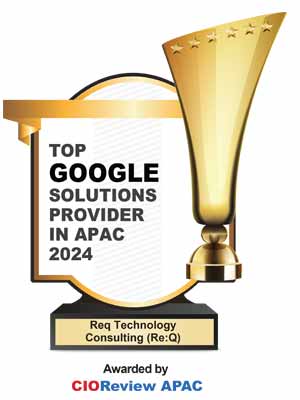
Company
Req Technology Consulting (Re:Q)
Management
Shigeru Kamiya, CEO
Description
Based on years of experience regarding non-functional requirements gained with mission-critical systems, Re:Q supports customers in migrating their IT infrastructure successfully to the cloud and constructing hybrid clouds.