Req Technology Consulting
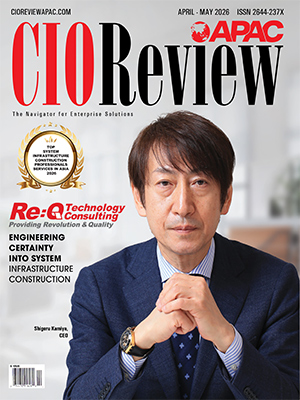
Engineering Certainty into System Infrastructure Construction

 Shigeru Kamiya, CEO
Across APAC, enterprise infrastructure programs are becoming more structurally complex. Oracle modernization, VMware exit strategies and multi cloud operations across AWS and OCI now sit under tighter regulatory oversight, stricter financial governance and increasing performance expectations. Infrastructure execution is no longer about relocating workloads. It is about aligning licensing exposure, performance thresholds, compliance controls and cost discipline before systems go live. When these dimensions are handled separately, problems surface late, often during cutover or in the first weeks after go live.
How does Re:Q approach infrastructure construction as a continuous lifecycle rather than fragmented stages?
Req Technology Consulting, also known as Re:Q, positions its work within that execution gap. The firm approaches system infrastructure construction as a controlled discipline where assessment, design, build execution and operational handover move from fragmented project stages to operating as one continuous lifecycle rather than fragmented project stages.
That philosophy is grounded in how the company defines success.
“Success is not a system that works on day one. Success is when the client’s operations team can run it confidently after we leave,” says Shigeru Kamiya, CEO.
We define success not as a system that works on day one. Success is when the client’s operations team can run it confidently without hesitation after we leave.
The name reflects that positioning. “Re” stands for revolutionary and “Q” for quality. For Re:Q, revolution does not mean adopting fashionable technologies. It means combining established, industry standard hardware, operating systems and middleware in ways that deliver stable, scalable systems clients can sustain themselves. This commitment to standard technologies reduces vendor lock in and preserves architectural continuity over time.
Measurable KPIs and Defined Conditions of Success
What key performance indicators define success in Re:Q’s infrastructure engagements and outcomes?
 Each engagement is structured around three measurable performance indicators.
The first is optimized total cost of ownership. During assessment, Re:Q performs detailed environment inventory using automated discovery tools to collect CPU, memory, IOPS and network utilization metrics. Oracle core factor calculations and virtualization licensing policies are resolved before architectural commitments are finalized. By addressing sizing and licensing constraints early, downstream compliance and cost exposure are minimized. In multiple engagements, this approach has resulted in TCO reductions in the 20 to 30 percent range compared to legacy on premise environments.
The second KPI is shortened time-to-service readiness. Designers establish guardrails early, defining constraints that allow infrastructure build, network validation and migration rehearsal to proceed in parallel rather than rigid sequence. Pre migration connectivity and latency verification is conducted before full environment construction is complete. In several programs, this sequencing discipline has reduced overall construction timelines by 30 to 50 percent while maintaining governance alignment.
The third KPI is improved risk tolerance. Unit testing, integration testing and full system validation are completed in controlled cloud environments prior to cutover. Baseline performance reports, including workload analysis and database execution comparisons, are captured before migration and validated after switchover under equivalent conditions. This structured verification reduces late stage defect discovery and converts project uncertainty into measurable readiness.
Success is confirmed when three observable conditions are met. The client’s operations team can manage the environment independently without hesitation. The architecture scales vertically or horizontally without redesign. Governance documentation is complete, transparent and audit- ready.
Governance Built for Predictability
How does governance and infrastructure as code improve predictability and control in projects?
Infrastructure programs rarely unfold without disruption. Hardware delivery delays, shifting cloud specifications and cross departmental approval bottlenecks can quietly erode timelines. Re:Q addresses these realities through three enforceable governance controls.
A dynamic risk registry catalogs known uncertainties based on prior engagements before issues surface. Each risk is quantified by probability and impact, and mitigation plans are prepared in advance. A predefined escalation matrix clarifies decision rights across field teams, PMO oversight and executive review, reducing coordination delays when constraints arise.
The real revolution for us is quality. We combine established technologies in a way that maximizes scalability, availability and cost efficiency while allowing clients to remain in control.
Infrastructure as code functions as the enforcement backbone. Network topology, security configurations and landing zones across AWS and OCI are defined through Terraform and Ansible. Manual console configuration is prohibited. Automated drift detection continuously compares declared configurations with actual cloud states. When discrepancies appear, reconciliation occurs in code rather than through ad hoc fixes.
“When infrastructure is codified, governance becomes measurable,” Kamiya explains. “You detect divergence immediately instead of discovering it during an outage.”
A structured, three tier review model reinforces accountability. Field delivery units respond to onsite realities. A centralized PMO monitors timeline and budget impact. A technical review board validates that architectural standards for stability and scalability remain intact before material changes proceed.
Delivery Discipline and Non-Negotiables
 Large scale Oracle database migrations and VMware exit programs are executed through four structured phases: discovery and assessment, landing zone construction, build and cutover, and stabilization.
Discovery establishes a quantified baseline. Dependencies across databases, applications, batch processes, backup systems and monitoring tools are mapped to define accurate migration waves. Latency between on premise and cloud environments is validated against application tolerance thresholds before sequencing is approved.
Landing zones are constructed using standardized templates that embed security controls, networking policies and governance guardrails from inception. This reduces configuration inconsistency across environments.
Build execution prioritizes minimal downtime and strict data integrity. Technologies such as Oracle GoldenGate and Data Guard are used for synchronized migration of large databases. Production switchover is rehearsed repeatedly until execution reliably fits within the approved maintenance window. Data integrity is verified through automated hash comparison and record count reconciliation before and after migration.
Stabilization focuses on operational continuity. Service level objectives are defined in business terms, such as batch completion windows or response time thresholds. Alerts are tied to those objectives instead of generic infrastructure signals, reducing noise and reinforcing accountability.
Across engagements, four controls remain non-negotiable: verified data integrity, active rollback preparation until final switchover, mandatory infrastructure as code compliance and security by default with encryption, access control and audit logging enabled at environment creation.
Preventing Slippage Through Early Risk Detection
In one large scale migration involving a VMware environment and multiple interconnected databases, early test cycles revealed intermittent packet loss within a specific network segment. At the same time, security approval workflows across client departments were creating silent bottlenecks, with minor configuration changes requiring several days for sign off.
Taking a proactive approach against a schedule delay, Re:Q restructured the delivery sequence. Migration waves were adjusted to prioritize components with confirmed connectivity. A focused decision group that included client approvers was formed to streamline security approvals. Existing manual configurations were replaced with verified infrastructure as code templates to eliminate environmental inconsistencies.
The result was measurable schedule recovery. A projected multi-week delay was avoided, and cutover was achieved within the approved window. Automation and pre-migration data validation reduced error rates during production switchover to below 0.1 percent. Post-migration operational effort was reduced significantly compared to the legacy environment due to standardization and codified governance.
Sustained Stability Beyond Go Live
Recurring client pain points, including hidden dependencies, performance gaps between physical and virtual environments and multi cloud license misalignment have shaped Re:Q’s evolution into a reusable delivery engine. Dependency reassessment continues throughout migration waves instead of ending at initial discovery. Zero downtime migration tooling is standardized for large estates to minimize disruption.
Day 2 operations receive equal attention. Baseline performance comparisons are conducted post migration, and scaling procedures are validated under controlled load increases to confirm that vertical instance adjustments and horizontal replica expansion can occur with minimal or no downtime. Error budget monitoring and trend analysis are used to determine when stabilization work should take priority over feature expansion.
Capability transfer is treated as a measurable outcome. Operations teams participate in shadowing periods prior to go live, working directly with codified infrastructure templates. Living documentation anchored in code repositories replaces static handover documents. Core architects remain engaged during structured post launch intervals to reinforce stability and validate scaling procedures.
Req Technology Consulting positions infrastructure construction as a discipline of engineered certainty. When systems remain stable under growth, governance remains visible under scrutiny and client teams operate independently without hesitation, the outcome is no longer simply a completed migration, but a sustained operating environment built for resilience.
How does governance and infrastructure as code improve predictability and control in projects?
Infrastructure programs rarely unfold without disruption. Hardware delivery delays, shifting cloud specifications and cross departmental approval bottlenecks can quietly erode timelines. Re:Q addresses these realities through three enforceable governance controls.
A dynamic risk registry catalogs known uncertainties based on prior engagements before issues surface. Each risk is quantified by probability and impact, and mitigation plans are prepared in advance. A predefined escalation matrix clarifies decision rights across field teams, PMO oversight and executive review, reducing coordination delays when constraints arise.
The real revolution for us is quality. We combine established technologies in a way that maximizes scalability, availability and cost efficiency while allowing clients to remain in control.
Infrastructure as code functions as the enforcement backbone. Network topology, security configurations and landing zones across AWS and OCI are defined through Terraform and Ansible. Manual console configuration is prohibited. Automated drift detection continuously compares declared configurations with actual cloud states. When discrepancies appear, reconciliation occurs in code rather than through ad hoc fixes.
“When infrastructure is codified, governance becomes measurable,” Kamiya explains. “You detect divergence immediately instead of discovering it during an outage.”
A structured, three tier review model reinforces accountability. Field delivery units respond to onsite realities. A centralized PMO monitors timeline and budget impact. A technical review board validates that architectural standards for stability and scalability remain intact before material changes proceed.
Delivery Discipline and Non-Negotiables
Large scale Oracle database migrations and VMware exit programs are executed through four structured phases: discovery and assessment, landing zone construction, build and cutover, and stabilization.Discovery establishes a quantified baseline. Dependencies across databases, applications, batch processes, backup systems and monitoring tools are mapped to define accurate migration waves. Latency between on premise and cloud environments is validated against application tolerance thresholds before sequencing is approved.
Landing zones are constructed using standardized templates that embed security controls, networking policies and governance guardrails from inception. This reduces configuration inconsistency across environments.
Build execution prioritizes minimal downtime and strict data integrity. Technologies such as Oracle GoldenGate and Data Guard are used for synchronized migration of large databases. Production switchover is rehearsed repeatedly until execution reliably fits within the approved maintenance window. Data integrity is verified through automated hash comparison and record count reconciliation before and after migration.
Stabilization focuses on operational continuity. Service level objectives are defined in business terms, such as batch completion windows or response time thresholds. Alerts are tied to those objectives instead of generic infrastructure signals, reducing noise and reinforcing accountability.
-
When infrastructure is codified, governance becomes measurable. You detect divergence immediately instead of discovering it during an outage.
Across engagements, four controls remain non-negotiable: verified data integrity, active rollback preparation until final switchover, mandatory infrastructure as code compliance and security by default with encryption, access control and audit logging enabled at environment creation.
Preventing Slippage Through Early Risk Detection
In one large scale migration involving a VMware environment and multiple interconnected databases, early test cycles revealed intermittent packet loss within a specific network segment. At the same time, security approval workflows across client departments were creating silent bottlenecks, with minor configuration changes requiring several days for sign off.
Taking a proactive approach against a schedule delay, Re:Q restructured the delivery sequence. Migration waves were adjusted to prioritize components with confirmed connectivity. A focused decision group that included client approvers was formed to streamline security approvals. Existing manual configurations were replaced with verified infrastructure as code templates to eliminate environmental inconsistencies.
The result was measurable schedule recovery. A projected multi-week delay was avoided, and cutover was achieved within the approved window. Automation and pre-migration data validation reduced error rates during production switchover to below 0.1 percent. Post-migration operational effort was reduced significantly compared to the legacy environment due to standardization and codified governance.
Sustained Stability Beyond Go Live
Recurring client pain points, including hidden dependencies, performance gaps between physical and virtual environments and multi cloud license misalignment have shaped Re:Q’s evolution into a reusable delivery engine. Dependency reassessment continues throughout migration waves instead of ending at initial discovery. Zero downtime migration tooling is standardized for large estates to minimize disruption.
Day 2 operations receive equal attention. Baseline performance comparisons are conducted post migration, and scaling procedures are validated under controlled load increases to confirm that vertical instance adjustments and horizontal replica expansion can occur with minimal or no downtime. Error budget monitoring and trend analysis are used to determine when stabilization work should take priority over feature expansion.
Capability transfer is treated as a measurable outcome. Operations teams participate in shadowing periods prior to go live, working directly with codified infrastructure templates. Living documentation anchored in code repositories replaces static handover documents. Core architects remain engaged during structured post launch intervals to reinforce stability and validate scaling procedures.
Req Technology Consulting positions infrastructure construction as a discipline of engineered certainty. When systems remain stable under growth, governance remains visible under scrutiny and client teams operate independently without hesitation, the outcome is no longer simply a completed migration, but a sustained operating environment built for resilience.
Designing Infrastructure for Long-Term Stability
Enterprise leaders investing in system infrastructure construction face a narrow margin for error. Cloud adoption, data gravity and multi-environment dependencies have increased complexity, yet boards expect predictable timelines, controlled costs and uninterrupted business continuity. The question is no longer whether infrastructure will be modernized, but whether it will be constructed in a way that sustains stability long after the project team exits.
Effective infrastructure construction begins by eliminating information gaps between assessment, design, build and commissioning. Fragmented handoffs create hidden dependencies, late-stage rework and budget drift. A disciplined approach connects early environment discovery with clear dependency mapping, license positioning and performance baselining. When physical and virtual assets are inventoried through automated discovery and migration units are defined by application and database relationships, migration feasibility becomes measurable rather than aspirational. Executives should expect evidence that scalability assumptions were tested during design, not deferred to production.
Predictability under changing conditions separates capable builders from true infrastructure partners. Hardware delays, evolving cloud specifications and shifting business priorities are routine. Governance must anticipate uncertainty rather than react to it. Mature delivery models maintain a quantified risk registry, predefined escalation paths and decision rights that limit approval bottlenecks. Infrastructure defined and enforced through code further protects design intent when site constraints emerge. Configuration drift detection, simulation in virtual environments and independent technical review layers reduce the likelihood that field-level adjustments erode architectural integrity. Accountability is reinforced when all configuration changes are codified and traceable.
Execution discipline across discovery, landing zone preparation, migration and stabilization is equally decisive. Enterprises migrating Oracle databases, exiting legacy virtualization platforms or consolidating multi-cloud estates require more than a lift-and-shift mindset. Dependency visualization, license optimization and landing zone standardization must precede build activity. Minimal-downtime migration techniques, automated format conversion and rehearsed cutover procedures protect data integrity. Non-negotiables such as automated hash validation, synchronized rollback capability and security controls enabled by default signal that business continuity is prioritized over schedule optics.
The true test of infrastructure construction appears after go-live. Performance accountability anchored to baseline comparisons, defined service-level objectives and integrated observability frameworks reduce post-migration blame cycles. Structured handover that embeds operations teams during the final phases, supported by living documentation and code repositories, limits black-box risk. Stability is confirmed when scaling actions can be executed with limited disruption, when false alerts are reduced to meaningful signals and when cost governance mechanisms prevent sprawl. Executives evaluating partners should look for demonstrated ability to recover schedule slippage through parallel sequencing, early risk surfacing and structural correction rather than incremental fixes.
Req Technology Consulting exemplifies this disciplined model. Founded in 2008 and headquartered in Tokyo, it delivers end-to-end infrastructure construction that integrates assessment, landing zone design, migration execution and post-launch stabilization. Its use of infrastructure as code across AWS and OCI environments, zero-downtime database migration practices and standardized landing zone blueprints align directly with the performance predictability and governance visibility that executives demand. It formalizes risk management through quantified registries and tiered review boards, embeds operations teams before handover and sustains environments through drift detection and cost controls. For organizations prioritizing stable Oracle migrations, controlled multi-cloud transitions and long-term scalability without vendor lock-in, Req Technology Consulting stands out as a premier choice grounded in disciplined execution rather than marketing claims.
...Read more
| Share this Article: Tweet
|
Company
Req Technology Consulting
Management
Shigeru Kamiya, CEO
Description
Req Technology Consulting, also known as Re:Q, is an APAC based infrastructure construction specialist that engineers Oracle, VMware and multi cloud transitions through codified governance, measurable KPIs and enforceable controls, delivering compliant, scalable environments that operations teams can manage independently.