World AI Show Wraps Up Landmark Indonesia Edition, Announces 46th Global Edition in Kuala Lumpur, Malaysia

CIO Review APAC | Tuesday, July 15, 2025

World AI Show Indonesia concludes with high-level dialogues, government and industry engagement on artificial intelligence innovation as Trescon names Kuala Lumpur the next stop for its global AI series following Indonesia’s successful showcase.
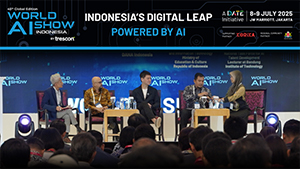
Jakarta, Indonesia – The highly anticipated Indonesia edition of World AI Show concluded on 9th July at the JW Marriott, Jakarta. Over 1500 enterprise tech decision-makers, investors, innovators, policy makers, and AI innovators gathered from across Southeast Asia to explore the transformative power of Artificial Intelligence. Organised by Trescon, the event showcased Indonesia’s emergence as a major hub for AI innovation, in line with the nation's Vision 2045 and its commitment to digital transformation.

The event was proudly supported by KORIKA, the Ministry of Industry – Indonesia, KADIN Jakarta, EC-Council, and other esteemed industry bodies like BRITCHAM Indonesia, Starfindo and Kumpul, the event highlighted the collective effort to advance AI adoption. These partnerships underscored the importance of public–private collaboration in fostering AI ecosystems in Indonesia and beyond.

The show featured 20+ top-tier sponsors, including Alibaba Cloud & BLUE POWER TECHNOLOGY, Tencent Cloud, UCLOUD GLOBAL, ASIX, Indonet, Reporty, Tech Proxima, ID star and many more. Their contributions created an immersive experience, facilitating high-value business connections and showcasing cutting-edge AI solutions shaping the region’s technological future.

The first day of the summit featured influential keynote addresses, thought leadership panels, and expert discussions on AI’s impact across industries. A standout moment came from a panel led by Prof. Hammam Riza, President of KORIKA and Vincent Henry Iswara, CEO of  DANA Indonesia. Their session explored how AI aligns with Indonesia’s Vision 2045, offering a roadmap for using AI as a catalyst for socio-economic growth, digital inclusion, and innovation-driven transformation.
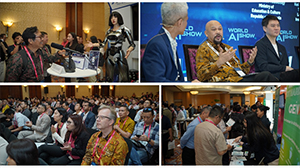
Other impactful conversations focused on AI ethics, workforce transformation, and cybersecurity, as leaders discussed how to harness AI’s potential responsibly.

Speaking on the occasion, Prof. Hammam Riza remarked, "Every time the World AI Show has been hosted in Indonesia, KORIKA has proudly been a part of it for the past three editions. Trescon has been instrumental in nurturing our AI ecosystem through the World AI Show, and we are very fortunate to continue this partnership. I am happy to see our journey with Trescon continuing to grow, as we work together to bring industry stakeholders—from businesses and technology leaders to civil society and the media—into meaningful dialogue and action that drives AI innovation and adoption across Indonesia.”

The event facilitated meaningful interactions, fostering new partnerships, investment opportunities, and cross-sector alliances that accelerated Indonesia’s digital transformation agenda. Echoing this sentiment, Abdulbadea Altukroni, CEO of Reporty, expressed his views, stating, "All the attendees were highly targeted, relevant, and actively engaged in the AI industry. This led to fruitful engagements with key stakeholders, policymakers, and leaders in the AI ecosystem. The event proved instrumental in helping us advance our company goals while also providing a valuable platform to witness the latest advancements in the market”

Day 2 of the event opened with keynote remarks from Arif Ilham Adnan, Co-Chairman/Permanent Committee at Association of Digital Leader Indonesia & The Jakarta Chamber of Commerce and Industry (KADIN Jakarta), who highlighted the importance of digital leadership, trust, and talent in advancing AI transformation. The day's sessions focused on practical AI applications, industry innovation, and collaboration, with discussions that offered actionable insights and showcased real-world use cases.

The session on AI, 5G & Cloud explored how intelligent systems are powering smart cities, urban innovation, and next-gen infrastructure, featuring insights from leaders at Transjakarta, Sinar Mas Land, and PT. Asian Bulk Logistics. The AI & Cybersecurity panel helmed by Felix Jingga, Chief Technology Officer at Govtech Indonesia, Sankata Lee, VP IT Strategic, Architecture & Innovation Head at Bank Negara Indonesia, Dito Eka Cahya, Ph.D, Head of AIoT & Robotics Lab at BRIN and Co-Founder at Forumsatria.ai, and Aman Kumar, Senior Director at EC Council Global Services ,Tom West, Chairman at BritCham Technology & Digitalisation Hub and Director of Juicebox addressed the critical balance between innovation and resilience in a hyper-connected world.

Ms. Wina Fidelis Ulita, Senior Business Manager at Tencent Cloud shared, "We were delighted to participate in the World AI Show. This was a much-needed and unique platform for Indonesia, where I had the opportunity to meet numerous potential clients and partners equally passionate about driving AI-led innovation."

One of the most anticipated moments was the FutureTech World Cup Indonesia Regionals, where emerging startups showcased ground-breaking solutions in AI, automation, and deep tech. Momofin was crowned the regional winner and will represent Indonesia in the Grand Finale at the Dubai AI Festival taking place in April 2026 in Dubai.

The event concluded on a high note, reinforcing Indonesia’s position as a growing centre for AI leadership and innovation, while providing a valuable platform for strategic networking and knowledge exchange.

As the event came to a close, Trescon announced the next chapter of its global AI series: the 46th Global Edition of the World AI Show, scheduled to take place in Kuala Lumpur, Malaysia, in October 2025. The upcoming edition is positioned to continue the conversation on AI’s pivotal role in driving economic diversification, fostering innovation, and enabling impact-driven transformation across the region. Register for the event at: https://worldaishow.com/malaysia

World AI Show Indonesia  solidified Trescon’s mission to empower governments, enterprises, and innovators to harness AI for sustainable and inclusive growth, driving the future of AI across Southeast Asia and beyond. 

More in News

A reuse retailer expanding beyond its home market faces a constraint that ordinary e-commerce systems often hide until volume rises. Each item is unique. A watch, bag, camera or garment cannot be replaced by another unit pulled from the same SKU pool. When the same listing appears across domestic marketplaces and overseas channels, even a short delay between the sale and stock removal can lead to a double sale, a refund dispute, a trust issue and a marketplace penalty. The buying question is not whether software can connect channels. It is whether it can keep frontline operations moving while protecting single-stock inventory from these narrow failure points. Product intake sets the pace. Cross-border reuse commerce depends on listing volume, but listing capacity is capped by how quickly staff can identify, photograph, register and describe each item. Heavy manual entry turns product intake into a backlog. Strong solutions reduce keystrokes at the start of the workflow, then carry product data into marketplace formats without forcing staff to rebuild categories or attributes for every channel. Translation matters most when it is integrated into listing workflows rather than treated as a separate content task. Price control adds another operational burden. Currency movement, regional pricing, commission structures and marketplace economics can drain hours when teams adjust storefronts manually. Buyers should look for software that can apply pricing rules at scale and keep exchange-rate changes from becoming spreadsheet work. This affects how quickly a seller can open a new channel and test demand without pushing routine updates back onto the people handling orders. An even better test is whether the software mirrors the sequence of work on the floor. Siloed tools may be acceptable when departments operate independently, but reuse commerce rarely behaves that neatly. Sourcing records, acquisition cost, listing time, sale location and buyer data all shape margin decisions. When those records sit in separate tools, management pays for integrations while staff pays for rework. A stronger system traces each item from intake to sale and gives management a clearer view of where time, margin, inventory accuracy and channel performance are changing. Co-creation deserves scrutiny. The phrase can become little more than marketing language unless it shows up in release behavior. In this market, minor screen friction can become a major delay when repeated across hundreds of items. Buyers should favor vendors that treat user feedback as product input and translate practical improvements into live releases at a pace that keeps pace with marketplace change. The right system should not force reuse operators to choose between channel expansion and staff workload. WASABI is a strong fit for executives seeking cross-border growth without losing control of item-level operations. WASABI SWITCH centralizes multi-store listing management, order processing, inventory synchronization and real-time stock updates within a single platform, helping retailers manage one-of-a-kind inventory across multiple marketplaces. STOCK SWITCH, its companion mobile application, simplifies product registration through a familiar smartphone interface. At the same time, WASABI continues to expand its AI-assisted item identification and registration capabilities to streamline listing workflows further. Its automated translation, marketplace-specific pricing, live foreign exchange updates and marketplace attribute management reduce much of the operational friction that slows international expansion. The platform's co-creation model is equally distinctive. Rather than treating customer feedback as routine support, WASABI incorporates frontline operational insights into continuous product development, releasing frequent enhancements that reflect real-world workflows. Where standard integrations are unavailable, the company supports marketplace connectivity via API or CSV-based connections, enabling businesses to expand into a broader range of reuse marketplaces. For organizations managing single-stock inventory across global channels, WASABI offers a measured and well-aligned recommendation. ...Read more
Across healthcare, sports performance and preventive wellness, musculoskeletal strain, whole body movement assessment and uneven rehabilitation results carry a recurring cost. Many rely on practitioner observation, separate imaging systems or movement scores that can change depending on who conducts the assessment. That inconsistency creates downstream problems in rehabilitation planning, training continuity and patient communication. Executive teams evaluating 3D posture analysis technology are no longer looking only for visual capture quality. They want to know whether a platform helps practitioners turn biomechanical data into consistent decisions across locations and the people they serve. The aim is to give clinical and coaching judgment a more dependable foundation. Skeletal tracking has limited value when the same movement leads practitioners to different conclusions. Useful data helps teams understand potential risks, choose corrective steps and see whether those steps are working. Decision-makers also want faster assessments that retain enough detail to support sound judgment, especially where staff shortages or differences in experience slow the work. Hardware complexity has also become a major purchasing constraint. A movement analysis system may work well in a pilot yet prove difficult to introduce across multiple locations. Extensive sensor setups, frequent calibration and disconnected software add time and cost at each site. Fitness chains, rehabilitation groups and elder-care providers need systems they can use without building specialized facilities around them. Smartphone-based capture makes that expansion more practical by reducing setup requirements and deployment costs. Centralized data visibility has become equally important. Executives want longitudinal physical data stored within unified dashboards rather than dispersed across disconnected tools, spreadsheets and practitioner notes. “eightis’ system incorporates annotation logic developed by elite trainers, converting expert assessment patterns into scalable digital analysis capable of generating improvement recommendations within seconds.” The strongest platforms also distinguish themselves through reproducibility Buyers want to know whose expertise informs an assessment and how that knowledge shapes its recommendations. Extensive annotated data grounded in established rehabilitation or performance methods gives those recommendations a firmer foundation. The reasoning also needs to be clear to the people using them. Patients are more likely to follow a program when they understand its purpose, while trainers need to see how small alignment adjustments could affect training load and recovery. Clear visuals help practitioners and trainers explain what they see, why they recommend a correction and what the person should work on. Security and continuity remain central procurement concerns as physical data collection expands. Healthcare and performance organizations face rising pressure to maintain traceable data governance standards while supporting distributed access across clinics, facilities and training teams. Platforms that combine assessment, exercise recommendation and centralized record management within one environment reduce administrative fragmentation and simplify long-term oversight. eightis aligns closely with these market expectations through its integration of AI-driven posture analysis, biomechanical interpretation and corrective exercise guidance within a single smartphone-based platform. Its system incorporates annotation logic developed by elite trainers, converting expert assessment patterns into scalable digital analysis capable of generating improvement recommendations within seconds. The company combines motion capture, visualization and individualized correction planning through its proprietary “shintai Karte” dashboard, allowing organizations to centralize physical assessment data while simplifying practitioner workflows. Its objective scoring and repeatable assessments help teams evaluate posture consistently, while easier deployment makes the technology practical across more locations. ISO 27001 certification also gives organizations greater confidence in how it manages and protects data over time. ...Read more
Disaster recovery technologies improve resilience and responses immediately, enabling communities and organizations to prepare, respond, and recover from disasters with increased speed and effectiveness. These optimize coordination and efficiency while driving the development of adaptable systems that facilitate successful management in overcoming crises. Here are a few technologies used in disaster recovery: Artificial Intelligence and Machine Learning: Use advanced algorithms to analyze data, predict disaster scenarios, and provide actionable insights to enhance early warning systems, risk assessments, and decision-making processes by processing large volumes of data quickly. These technologies enable precise predictions and help optimize resource allocation during recovery. AI-driven models continuously learn from new data to improve accuracy over time with the ability to identify patterns and anomalies to support faster and more informed responses. Machine learning also aids in automating tasks and refining recovery strategies to improve the efficiency and effectiveness of disaster response efforts. Autonomous Drones: Equipped with high-resolution cameras and sensors to conduct aerial surveys and assess damage through time imagery and data, allowing for rapid evaluation of affected areas. Drones can access hard-to-reach locations and deliver essential supplies during emergencies to operate safely and efficiently in disaster zones. They help monitor maps in damaged areas and recovery progress, making them flexible and precise tools for disaster response. Internet of Things (IoT): MalgnSoft explains in Education Technology Insights that the Internet of Things (IoT) plays a crucial role in disaster recovery through interconnected devices and sensors that collect and transmit real-time data. IoT supports monitoring of infrastructure conditions, environmental factors, and supply chains, providing critical insights for damage assessment and effective resource management. By integrating data from multiple sources, IoT enhances situational awareness and enables informed decision-making during crises. Continuous updates and detailed analytics improve coordination among response teams, ultimately optimizing disaster response and accelerating recovery efforts. Disaster Apps: Enable applications on smartphones and tablets, offering flexibility and accessibility in disaster recovery operations to facilitate communication and coordination among disaster response teams, affected individuals, and support agencies. Mobile apps provide functionalities such as field reporting, task management, and access to critical information, enhancing on-the-ground responsiveness. These platforms support the dissemination of alerts, updates, and instructions to users in affected areas by enabling data sharing and collaborating with mobile platforms to improve the efficiency and effectiveness of disaster recovery efforts. Robotic Systems : These are deployed in disaster recovery to perform tasks in hazardous conditions that are challenging or dangerous for human responders through advanced sensors. AI robots navigate and interact with their environment, automating repetitive and labor-intensive tasks by accessing hard-to-reach areas, conducting inspections, and performing infrastructure repairs by reducing the need for human intervention. Robots enhance the ability to operate in dangerous environments and handle complexes to improve the efficiency and speed of recovery efforts, contributing significantly to disaster response and management. Infrastructure Design: The design focuses on creating buildings and systems that can withstand and quickly recover from disasters using advanced materials, modular construction methods, and adaptive technologies to enhance durability. This approach minimizes damage during disasters, speeds up recovery, and incorporates reinforced structures, flood resistance, and earthquake protection. Resilient infrastructure supports the continuity of essential services and reduces recovery time with long-term sustainability and cost-effectiveness in construction. The latest innovations in disaster recovery are improving situational awareness, streamlining coordination, and accelerating recovery efforts. As these technologies develop, disaster recovery will become more efficient, effective, and resilient. This will ultimately reduce the impact of disasters on lives and communities, building a more prepared and resilient world. ...Read more
The legal sector in APAC is looking at fresh approaches to deal with ever-expanding workloads without compromising on the accuracy or professionalism of legal work. Digital tools are increasingly useful for reviewing documents, organizing information and supporting research. The increasing adoption of AI technology is a realistic change in the way that law professionals tackle repetitive tasks. These new systems are not intended to replace lawyers, but to take away repetitive tasks, thereby freeing up time for professionals to handle tasks that demand careful judgment. Why are APAC Legal Teams Adopting AI Tools? Large amounts of contracts, case records and regulations are commonly used in legal teams. AI Legal Tech can analyze such documents and flag relevant clauses, pinpoint crucial information, and identify details that require further investigation. After that, lawyers can review important findings without having to do a manual search through all of the documents. Legal research is also being improved. AI systems can also go through large amounts of legal documents and assist in identifying relevant materials, precedents, regulations, and supporting documents. Greater speed in searching can limit repetitive tasks and free up time for professionals to evaluate the relevance of search results and formulate effective legal options. Contract management is one of the areas receiving focus. Automated agreements can help categorize agreements and highlight key provisions or obligations. Companies can use such systems to boost their oversight and lessen the risk of neglecting requirements that might impact business relationships or internal operations. How is AI Changing Legal Workflows across APAC? AI is also aiding administrative processes. Legal teams can use automated document classification, information extraction and matter organization systems. Limited repetition enables experts to focus on complex analysis, client needs and decisions based on experience and context. Another key application is compliance. The legal requirements and record-keeping are different in each jurisdiction, and multi-jurisdictional organizations need to keep track of various legal requirements and record-keeping. AI can be used to sift through regulatory data and highlight potential concerns for further review. Human verification is still needed as legal requirements may differ depending on the jurisdiction and context. Caution must also be taken with regard to data protection. Access to, storage and use of systems and information by legal teams needs to be controlled so as not to compromise confidential client information and business information. Good governance can set guidelines for using AI tools to handle sensitive content, uphold confidentiality, and adhere to professional obligations. ...Read more
Top