World AI Show Indonesia: Catalyst For Indonesia's Digital Economic Transformation

CIO Review APAC | Tuesday, May 20, 2025

Jakarta, Indonesia – Trescon announces the 45th global edition of the World AI Show, scheduled for 8-9 July 2025 at J.W. Marriott, Jakarta, positioning Indonesia at the forefront of artificial intelligence innovation in Southeast Asia.

As Indonesia's digital economy is projected to surpass $130 billion by year-end 2025, the nation stands poised to consolidate its position as Southeast Asia's preeminent technology hub. The World AI Show will serve as a critical convergence point for global technology leaders, policymakers, and investors to explore AI's transformative potential across Indonesia's rapidly evolving digital landscape.
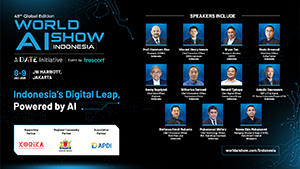
“AI is a rapidly evolving technology with global implications, and its optimal implementation is still being explored. Open discussions among diverse stakeholders are essential in shaping its future responsibly. A thoughtful approach to AI adoption is crucial, as studying and evaluating AI-driven decisions helps companies refine their understanding and application of the technology. Events like the World AI Show provide platforms for dialogue and collaboration, contributing to discussions on governance, sustainability, and the responsible adoption of AI to ensure its safe and ethical use”, Said Vince Henry Iswara, CEO of DANA INDONESIA.

The exclusive gathering will provide comprehensive insights into Indonesia's "Making Indonesia 4.0" initiative, which strategically positions artificial intelligence as the cornerstone of the nation's ambitious digital transformation agenda. This framework aligns with Indonesia's broader economic objectives of technological sovereignty and global leadership in advanced digital economies.

Strategic Focus Areas

The World AI Show, Indonesia will facilitate high-level discourse on critical AI implementation domains, including:

• AI-Driven Enterprise Transformation – Advanced frameworks for organizational intelligence and operational excellence

• Decision Intelligence Systems – Methodologies for translating complex data infrastructures into actionable business intelligence

• Enterprise-Scale AI Deployment – Roadmaps for implementing AI solutions that deliver measurable returns on investment

• Regulatory Excellence and Ethical Governance – Balancing innovation with responsible deployment protocols

• Urban Technology Integration – Blueprint strategies for data-driven municipal infrastructure

• Human-Machine Collaborative Frameworks – Redefining workforce capabilities through augmented intelligence systems

• Data Architecture Mastery – Establishing robust foundations for cognitive computing implementation

Exceptional Engagement Platform

The meticulously curated program will feature:

• Executive Roundtables – Closed-door discussions facilitating strategic partnerships and investment opportunities

• Technical Workshops – Deep-dive sessions led by recognized authorities in AI implementation

• Investment Showcases – Carefully selected presentations from Indonesia's most promising AI ventures

• Policy Forums – Direct engagement with regulatory stakeholders shaping Indonesia's AI governance framework

• Networking Functions – Structured opportunities for meaningful relationship development with key industry figures

Strategic Value Proposition

The World AI Show represents a singular opportunity for:

• Technology Leaders – Showcase pioneering solutions to Indonesia's most receptive audience of enterprise adopters

• Solution Providers – Establish strategic positioning within Indonesia's rapidly expanding AI implementation landscape

• Investors – Access to meticulously vetted investment opportunities in one of Asia's most dynamic technology markets

• Enterprise Executives – Comprehensive evaluation of AI technologies with demonstrable business impact potential

• Academic Institutions – Research partnership development with industry counterparts driving applied innovation

“As we mark the 5th edition of World AI Show in Indonesia and the 45th globally, it reflects not just continuity but the growing relevance of Indonesia in the regional AI landscape. With national priorities like Stranas KA and Vision 2045 accelerating AI adoption, this edition brings together the leadership and expertise needed to turn ambition into real-world outcomes across sectors”, said Mithun shetty,Vice chairman- Trescon.

Secure your position at the forefront of Indonesia's AI revolution and join the select cohort of visionaries who will define the nation's technological trajectory for decades to come. The future of AI in Southeast Asia is being written now—ensure your organization is holding the pen.

More in News

Across healthcare, sports performance and preventive wellness, musculoskeletal strain, whole body movement assessment and uneven rehabilitation results carry a recurring cost. Many rely on practitioner observation, separate imaging systems or movement scores that can change depending on who conducts the assessment. That inconsistency creates downstream problems in rehabilitation planning, training continuity and patient communication. Executive teams evaluating 3D posture analysis technology are no longer looking only for visual capture quality. They want to know whether a platform helps practitioners turn biomechanical data into consistent decisions across locations and the people they serve. The aim is to give clinical and coaching judgment a more dependable foundation. Skeletal tracking has limited value when the same movement leads practitioners to different conclusions. Useful data helps teams understand potential risks, choose corrective steps and see whether those steps are working. Decision-makers also want faster assessments that retain enough detail to support sound judgment, especially where staff shortages or differences in experience slow the work. Hardware complexity has also become a major purchasing constraint. A movement analysis system may work well in a pilot yet prove difficult to introduce across multiple locations. Extensive sensor setups, frequent calibration and disconnected software add time and cost at each site. Fitness chains, rehabilitation groups and elder-care providers need systems they can use without building specialized facilities around them. Smartphone-based capture makes that expansion more practical by reducing setup requirements and deployment costs. Centralized data visibility has become equally important. Executives want longitudinal physical data stored within unified dashboards rather than dispersed across disconnected tools, spreadsheets and practitioner notes. “eightis’ system incorporates annotation logic developed by elite trainers, converting expert assessment patterns into scalable digital analysis capable of generating improvement recommendations within seconds.” The strongest platforms also distinguish themselves through reproducibility Buyers want to know whose expertise informs an assessment and how that knowledge shapes its recommendations. Extensive annotated data grounded in established rehabilitation or performance methods gives those recommendations a firmer foundation. The reasoning also needs to be clear to the people using them. Patients are more likely to follow a program when they understand its purpose, while trainers need to see how small alignment adjustments could affect training load and recovery. Clear visuals help practitioners and trainers explain what they see, why they recommend a correction and what the person should work on. Security and continuity remain central procurement concerns as physical data collection expands. Healthcare and performance organizations face rising pressure to maintain traceable data governance standards while supporting distributed access across clinics, facilities and training teams. Platforms that combine assessment, exercise recommendation and centralized record management within one environment reduce administrative fragmentation and simplify long-term oversight. eightis aligns closely with these market expectations through its integration of AI-driven posture analysis, biomechanical interpretation and corrective exercise guidance within a single smartphone-based platform. Its system incorporates annotation logic developed by elite trainers, converting expert assessment patterns into scalable digital analysis capable of generating improvement recommendations within seconds. The company combines motion capture, visualization and individualized correction planning through its proprietary “shintai Karte” dashboard, allowing organizations to centralize physical assessment data while simplifying practitioner workflows. Its objective scoring and repeatable assessments help teams evaluate posture consistently, while easier deployment makes the technology practical across more locations. ISO 27001 certification also gives organizations greater confidence in how it manages and protects data over time. ...Read more
Disaster recovery technologies improve resilience and responses immediately, enabling communities and organizations to prepare, respond, and recover from disasters with increased speed and effectiveness. These optimize coordination and efficiency while driving the development of adaptable systems that facilitate successful management in overcoming crises. Here are a few technologies used in disaster recovery: Artificial Intelligence and Machine Learning: Use advanced algorithms to analyze data, predict disaster scenarios, and provide actionable insights to enhance early warning systems, risk assessments, and decision-making processes by processing large volumes of data quickly. These technologies enable precise predictions and help optimize resource allocation during recovery. AI-driven models continuously learn from new data to improve accuracy over time with the ability to identify patterns and anomalies to support faster and more informed responses. Machine learning also aids in automating tasks and refining recovery strategies to improve the efficiency and effectiveness of disaster response efforts. Autonomous Drones: Equipped with high-resolution cameras and sensors to conduct aerial surveys and assess damage through time imagery and data, allowing for rapid evaluation of affected areas. Drones can access hard-to-reach locations and deliver essential supplies during emergencies to operate safely and efficiently in disaster zones. They help monitor maps in damaged areas and recovery progress, making them flexible and precise tools for disaster response. Internet of Things (IoT): MalgnSoft explains in Education Technology Insights that the Internet of Things (IoT) plays a crucial role in disaster recovery through interconnected devices and sensors that collect and transmit real-time data. IoT supports monitoring of infrastructure conditions, environmental factors, and supply chains, providing critical insights for damage assessment and effective resource management. By integrating data from multiple sources, IoT enhances situational awareness and enables informed decision-making during crises. Continuous updates and detailed analytics improve coordination among response teams, ultimately optimizing disaster response and accelerating recovery efforts. Disaster Apps: Enable applications on smartphones and tablets, offering flexibility and accessibility in disaster recovery operations to facilitate communication and coordination among disaster response teams, affected individuals, and support agencies. Mobile apps provide functionalities such as field reporting, task management, and access to critical information, enhancing on-the-ground responsiveness. These platforms support the dissemination of alerts, updates, and instructions to users in affected areas by enabling data sharing and collaborating with mobile platforms to improve the efficiency and effectiveness of disaster recovery efforts. Robotic Systems : These are deployed in disaster recovery to perform tasks in hazardous conditions that are challenging or dangerous for human responders through advanced sensors. AI robots navigate and interact with their environment, automating repetitive and labor-intensive tasks by accessing hard-to-reach areas, conducting inspections, and performing infrastructure repairs by reducing the need for human intervention. Robots enhance the ability to operate in dangerous environments and handle complexes to improve the efficiency and speed of recovery efforts, contributing significantly to disaster response and management. Infrastructure Design: The design focuses on creating buildings and systems that can withstand and quickly recover from disasters using advanced materials, modular construction methods, and adaptive technologies to enhance durability. This approach minimizes damage during disasters, speeds up recovery, and incorporates reinforced structures, flood resistance, and earthquake protection. Resilient infrastructure supports the continuity of essential services and reduces recovery time with long-term sustainability and cost-effectiveness in construction. The latest innovations in disaster recovery are improving situational awareness, streamlining coordination, and accelerating recovery efforts. As these technologies develop, disaster recovery will become more efficient, effective, and resilient. This will ultimately reduce the impact of disasters on lives and communities, building a more prepared and resilient world. ...Read more
The legal sector in APAC is looking at fresh approaches to deal with ever-expanding workloads without compromising on the accuracy or professionalism of legal work. Digital tools are increasingly useful for reviewing documents, organizing information and supporting research. The increasing adoption of AI technology is a realistic change in the way that law professionals tackle repetitive tasks. These new systems are not intended to replace lawyers, but to take away repetitive tasks, thereby freeing up time for professionals to handle tasks that demand careful judgment. Why are APAC Legal Teams Adopting AI Tools? Large amounts of contracts, case records and regulations are commonly used in legal teams. AI Legal Tech can analyze such documents and flag relevant clauses, pinpoint crucial information, and identify details that require further investigation. After that, lawyers can review important findings without having to do a manual search through all of the documents. Legal research is also being improved. AI systems can also go through large amounts of legal documents and assist in identifying relevant materials, precedents, regulations, and supporting documents. Greater speed in searching can limit repetitive tasks and free up time for professionals to evaluate the relevance of search results and formulate effective legal options. Contract management is one of the areas receiving focus. Automated agreements can help categorize agreements and highlight key provisions or obligations. Companies can use such systems to boost their oversight and lessen the risk of neglecting requirements that might impact business relationships or internal operations. How is AI Changing Legal Workflows across APAC? AI is also aiding administrative processes. Legal teams can use automated document classification, information extraction and matter organization systems. Limited repetition enables experts to focus on complex analysis, client needs and decisions based on experience and context. Another key application is compliance. The legal requirements and record-keeping are different in each jurisdiction, and multi-jurisdictional organizations need to keep track of various legal requirements and record-keeping. AI can be used to sift through regulatory data and highlight potential concerns for further review. Human verification is still needed as legal requirements may differ depending on the jurisdiction and context. Caution must also be taken with regard to data protection. Access to, storage and use of systems and information by legal teams needs to be controlled so as not to compromise confidential client information and business information. Good governance can set guidelines for using AI tools to handle sensitive content, uphold confidentiality, and adhere to professional obligations. ...Read more
Businesses from all sectors are creating and analyzing more data than they ever have before. Companies are also facing heightened demands for quick decisions, increased operational efficiency, better customer experiences, and adapting to market fluctuations. The challenges are being addressed using artificial intelligence, data analytics, and cloud technologies. AI and data & cloud solutions enable organizations to effectively collect, manage, analyze, and leverage the information in a scalable digital environment. Infusing intelligent technologies and flexible cloud infrastructure into the business helps businesses derive new opportunities for innovation, productivity, and sustainable growth across APAC. Enhancing Decision-Making through AI-Powered Data Intelligence AI-driven analytics solutions provide organizations with the ability to uncover trends, patterns, and opportunities that would be tough to identify using conventional analysis techniques. By analyzing huge amounts of data quickly, machine learning models can help businesses gain insights into their customers' behavior, performance, and market trends. Predictive analytics is becoming a more and more valuable tool for decision makers. Recorded and real-time data can help organizations predict demand, maintain optimal stock levels, plan for maintenance needs, and allocate resources more effectively. These capabilities enable businesses to deal with the changing situation rather than react to it. Data integration is also a key element in enhancing visibility throughout the business. Modern data platforms integrate information from across systems, applications and departments into one place. This allows leaders to have access to consistent and reliable information and facilitates improved teamwork. AI technologies are also furthering automation. Intelligent systems can handle repetitive work, analyze information, make recommendations and assist in decision-making processes. This enables employees to concentrate on higher-value activities and boost overall productivity and efficiency. The more organizations continue to expand their digital operations, the more important it becomes to use data as a competitive asset. The capabilities of AI and advanced analytics to transform data into actionable insights continue to fuel business growth and innovation throughout APAC. Strengthening Digital Operations with Scalable Cloud Infrastructure Cloud technology has revolutionized the application, infrastructure and data resource management for organizations. Rather than depending on conventional on-premises solutions, enterprises could use scalable computing resources that can adjust to their growing needs. Flexibility is one of the key benefits of cloud platforms. Organizations can quickly scale up or down computing power without major capital expenditure as needed. The scalability it offers is beneficial to the expansion of business operations and the efficient management of costs. Cloud environments allow employees to access applications and data securely from different locations, such as remote or global teams, and improve access and collaboration. These are becoming more important as flexibility grows in the workforce across organizations – especially in APAC markets. Security is an important factor for businesses that are moving to the cloud. For today's cloud providers, cybersecurity is a major concern, one for which they invest heavily in technology, threat monitoring, data protection and compliance frameworks. While cloud platforms provide more advanced tools to complement data protection strategies, organizations remain the ones with oversight over their security strategies. Besides the benefits mentioned above, businesses can also experience business continuity and disaster recovery with cloud adoption. Cloud-based architectures offer the ability to support data backup, redundancy and recovery, which can help to reduce operational disruptions. Businesses can continue to operate essential systems and data in the event of an unforeseen circumstance. Cloud platforms also drive innovation by offering access to other cutting-edge technologies like AI, machine learning, analytics, automation and application development services. New solutions can be introduced faster, and the complexity of managing the infrastructure in-house is reduced, supporting digital transformation initiatives across APAC. Creating Business Value through Integrated AI and Cloud Solutions Organizations can create intelligent data environments that are constantly collecting, analyzing and interpreting data from many data sources. These systems make timely decisions, automate processes, and optimize their operations in various functions. Integrated AI and cloud solutions can provide substantial benefits, particularly when it comes to customer experience improvement. Customer interactions can be analyzed, services can be tailored to the individual, customer preferences can be predicted, and customer expectations can be met more effectively. Such capabilities can foster improved customer relationships, together with better service quality. Smart automation and sophisticated analytics also contribute to operational efficiency. All organizations can benefit from streamlining workflows, cutting down on manual effort, making best use of resources, and finding opportunities for ongoing improvement. These gains help to improve productivity and business management. New technology bases are increasingly being used in innovation projects. AI and cloud-based platforms enable businesses to play with innovative business models, initiate digital services, build intelligent applications, and explore new technologies without significant infrastructure limitations. These capabilities continue to support business modernization and innovation throughout APAC. ...Read more
Top