
CIOReview APAC Weekly Brief
Be first to read the latest tech news, Industry Leader's Insights, and CIO interviews of medium and large enterprises exclusively from CIOReview APAC
A featured contribution from Leadership Perspectives: a curated forum reserved for leaders nominated by our subscribers and vetted by the CIOReview Advisory Board.

ONYX Hospitality Group
From Property-Centric to Guest-Centric: The New Core of Hospitality Technology
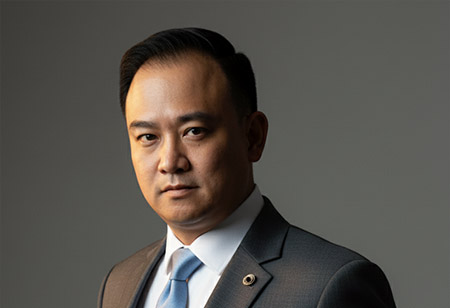
Phiphat is a skillful professional with over 20 years of experience in the hospitality business technology sector. As an expert in the field, he has led information technology environments and spearheaded successful technology projects that serve as the backbone of organizations.
Throughout his 10-year tenure with ONYX Hospitality Group, a leading management company in Southeast Asia, specialising in hotels, resorts, serviced apartments, and luxury residences, he has been responsible for defining technology strategies, overseeing their management and implementation, and ensuring their usability. Phiphat’s innovative mindset and dedication to driving technological advancements have significantly contributed to the organization’s growth and success. His expertise in leveraging technology to enhance operations and customer experiences has earned him a reputation as a leader in the hospitality business technology industry.
Recognising Phiphat Khanonwet’s extensive leadership in IT innovation at ONYX Hospitality Group, which aims to be the leading medium-sized hospitality management company in Southeast Asia, this exclusive feature provides invaluable insights into the next advancements in core technology within the hospitality industry. It highlights the future of technology stacks in delivering personalisation and maximising guest experience.
For many years, the Property Management System (PMS) has served as a “core” application within the hospitality industry, enabling hotel operations across the entire guest journey, from booking to checkout. The PMS functions as the central hub of the hotel, structured to support the property and its operational requirements with no significant change while evolution from on-premised green screens to native cloud-based.
The increasing importance of data analytics has brought us to a pivotal inflection point that will fundamentally reshape our technology stack.
The Property Management System (PMS) is increasingly regarded as less suitable for the evolving needs of the hospitality industry. While it efficiently manages the logistics of a guest's stay, it does not provide a comprehensive view of the guest journey from pre- reservation through post-departure especially when hospitality would like to provide hyper- personalization throughout the guest journey to maximize experience. Consolidating comprehensive guest information, including preferences and stay history, into a single platform can serve as a foundational strategy for the hospitality industry.
Moving forward, transitioning the core application from a Property Management System (PMS) to a Guest Data Platform (GDP) or a Customer Data Platform (CDP) is expected to be pivotal for future success. A GDP would serve as the single source of truth for every guest, capturing all interactions and data points across their entire journey, regardless of which hotel they visit within hotel portfolio includes integration with 3rd party’s platform aspect which GDP/CDP provides more comprehensive coverage of the guest journey compared to integration solely with a PMS.
The New Hospitality Ecosystem
In this new theory, the technology stack would be re-architected around the guest centralized with GDP/CDP integrating with all other applications.
• The core of Ecosystem “GDP/CDP”: This platform would consolidate data from various sources the PMS, booking engines, loyalty programs, marketing platforms, and even on-property systems like restaurant POS or spa booking software. It would build a comprehensive, 360-degree profile of each guest, detailing their preferences, past stays and spending habits.
• Modular Service “PMS”: The PMS will no longer serve as a centralized system for operations. However, it is designed to become a key modular service or component in the diagram focused specifically on property operations such as reservation, check-in/out, room management, and cashiering. The hotel operations team will receive essential guest information from GDP/CDP, enabling them to proactively prepare and deliver personalized services tailored to guest preferences in advance of requests.
“It's about moving beyond managing property logistics to truly understand and serving personalization service to maximize guests’ experiences”
• Powerful Integration “Specialized Tools”: With the guest data centralized, we can consider enhancing specific functions for applications in the ecosystem. For example – Marketing team can even use agent (or AI Agent) to automatically retrieve real-time data from GDP/CDP to send personalized offers.
The SPA team with integrated SPA application, is enabled to assess guests' conditions and preferences in advance, enabling the automated creation of treatment course lists that precisely match each individual's essential oil requirement present on guest mobile application or in-room television.
Possibilities and Potential
This guest-centric model unlocks incredible opportunities. We can move from reactive service to proactive personalization. Imagine a guest who frequently orders a specific red wine at our hotel in Hong Kong. When they arrive at our hotel in Phuket, their preferred red wine could be in their room automatically. This approach also enables powerful hyper- personalization in customer relationship, marketing and loyalty. We can analyze guest data to predict future needs and build loyalty programs that reward behavior, not just stays. For example, a platform could identify a guest who frequently travels for family vacations and offers them a tailored package for their next trip.
The Challenges and Concerns
PMS has been platform in hospitality industry for many years, implementing this new theory would be comes with possibly challenges due to complexity of the architecture and integration which requires careful planning.
1. Data Governance and Data Privacy: A centralized guest data platform brings significant responsibility. Data privacy regulations (like GDPR, PDPA, etc.) and guest consent are very crucial and must be strictly followed. Storing sensitive information in a centralized system necessitates substantial investment in robust data governance and cybersecurity measures to ensure comprehensive protection of all relevant data.
2. Integration Complexity: Transitioning integration processes for each modular service, such as PMS, to a new core like GDP/CDP presents various challenges,
particularly when working with legacy PMS systems that do not yet support modern and secure integration methods (such as open APIs or real-time data exchange).
Careful planning is required for technology stack modernization.
3. Operational Change: Shifting from property-centric to guest-centric will cause reengineering the operational procedures which require extensive training for top- to-bottom. Frontline staff must be empowered and trained to use the new data to deliver better service, not just to complete a task while management require using the data to define business strategies.
The transformation from a “property-centric” world to a “guest-centric” one is more than just a technology upgrade; it's a strategic realignment of our business. It's about moving beyond managing property logistics to truly understand and serving personalization service to maximize guests’ experiences.
