
CIOReview APAC Weekly Brief
Be first to read the latest tech news, Industry Leader's Insights, and CIO interviews of medium and large enterprises exclusively from CIOReview APAC
A featured contribution from Leadership Perspectives: a curated forum reserved for leaders nominated by our subscribers and vetted by the CIOReview Advisory Board.

R3i CAPITAL
Breaking the Venture Capital Oligarchy
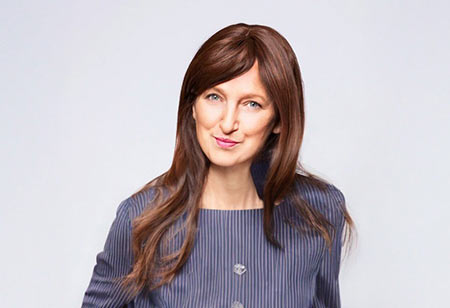
Leesa Soulodre, Founder and Managing Partner of R3i Capital, is a trailblazing venture capitalist driving innovation at the intersection of deep tech, frontier science, and sustainable impact. With global leadership experience, she champions ESG investment, gender equity, and transformative technology ventures worldwide.
Shaping R3i CAPITAL’s Vision
The birth of R3i CAPITAL wasn't a boardroom decision — it was forged in hospital corridors at 3 AM, in the gap between what technology promises and what patients actually receive.
Picture this: A young nurse watching brilliant minds struggle with Alzheimer's, then a military medic seeing how quickly systems fail when lives hang in the balance. Add a personal dance with disability that strips away any illusions about "patient-centered care." That was my crucible. Across three continents, I witnessed the same pattern — brilliant innovations dying in translation, not because they lacked merit, but because they were built for PowerPoints, not people.
“Healthcare is not a technology problem with human complications. It is a human problem that technology can help solve”
Here's what the data told me: 95% of digital health solutions fail to scale across borders. Why? Because Silicon Valley's obsession with "move fast and break things" breaks down when the "things" are human lives. R3i Capital exists because someone needed to build the bridge between the lab bench and the patient's bedside, between Bangkok's innovation hubs, Europe´s hospital R&D and networks and Boston's research centers.
Shattering the venture capital ceiling while building new rooms
Let me share an uncomfortable truth: Not all money is equal.
My approach? I call it "radical evidence." When a room full of men questions whether diverse teams perform better, I do not argue philosophy. I pull up the Harvard Business Review study showing diverse teams deliver 35% better returns. When they doubt women-led healthtech, I point to the data: female founders in healthcare generate 2.3 times better outcomes, because surprise, women make 80% of healthcare decisions.
But here is the real strategy: I stopped trying to fit into their game and started changing the rules. We restructured our deal flow process. Instead of warm introductions that favor the already connected, we analyze fundability assessments, patent filings, clinical trial data, and research publications. Suddenly, that brilliant founder in Mumbai has the same shot as the Stanford MBA.
On challenging the megafund monopoly as an emerging manager
Last quarter, the top 20 firms captured 87% of all LP commitments. The same firms that passed on Airbnb eleven times and told Melanie Perkins she would never build a design empire still miss 90% of breakthrough innovations because they are pattern-matching against last decade’s successes.
Here is what I discovered at R3i CAPITAL: The venture ecosystem has become an oligarchy where track records are measured in AUM, not impact. Our philosophy is different. Megafunds deploy capital like carpet bombing. We act like precision surgeons. While they compete over the same 50 deals in Silicon Valley, we back researchers in places like Uruguay solving antimicrobial resistance with $50,000 and brilliance.
Emerging managers generate 2.4 times better returns than established funds yet receive less than 15% of LP capital. Our advantage is not competing with megafunds but playing a different game entirely.
Navigating Global Startup Challenges
The brutal reality? I spend half my time translating between worlds that speak different languages — and I don't mean English versus Mandarin. I mean the language of "FDA approval timelines" versus "we need to pivot yesterday."
Last month, I sat with a founder whose AI diagnostic tool could prevent 10,000 deaths annually. The technology works. The clinical validation is solid. But navigating GDPR in Europe, HIPAA in the US, and data sovereignty laws in Asia? That's a three-year maze that most founders can't afford to navigate.
Our approach may not be flashy, but it is effectiveOur solution isn't sexy, but it works: radical transparency meets strategic patience. We built what I call "regulatory scaffolding" — pre-negotiated pathways with regulatory bodies across six countries. We build automated compliance platforms and clinical matching pathways into a founder's GPS through the regulatory wilderness. And we only partner with co-investors who measure success in lives improved, not just IRR.
Emerging Trends in Healthcare Innovation
Everyone talks about AI in healthcare. Let me show you what it actually looks like: Four weeks ago, I needed predictive care platforms for respiratory, cardiac, neuro, and infectious diseases. Traditional path? $4.5 million and 18 months. My path? $50 and four weeks using AI agents.
But here's what keeps me up at night with excitement: We're moving from "AI can read X-rays" to "AI can predict your heart attack three months before it happens by analyzing your breathing patterns during sleep." The convergence of edge computing, federated learning, and explainable AI means we can finally deliver on precision medicine's promise without sacrificing privacy.
The game-changer? AI that explains itself. When a model tells a cardiologist not just "this patient is at risk" but "here's why, here's the evidence, and here's what you might have missed," we transform skeptics into advocates.
Guidance for Startups on a Global Stage
Stop building solutions, looking for problems. Last week, I met a founder who spent six months perfecting their algorithm before talking to a single doctor. That is like designing a parachute without ever asking a skydiver what they need.
The founders who succeed are part anthropologist, part technologist, part diplomat. They know sustainable innovation is not about the smartest technology but about the deepest understanding of human behavior. They treat regulations not as obstacles but as design constraints that make their solutions stronger.
Here is my challenge: Can you explain your innovation to a patient in rural India and a regulator in Luxembourg? Can you show not only your technology roadmap but your cultural adaptation strategy?
Healthcare is not a technology problem with human complications. It is a human problem that technology can help solve. The difference is not semantic, it is existential. Only together, we rise.
