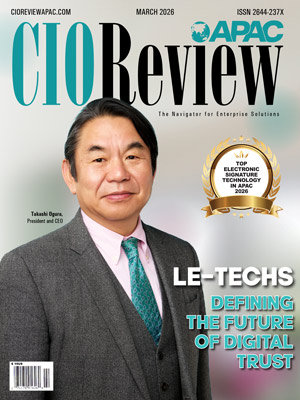
Le-Techs
Defining the Future of Digital Trust

 Takashi Ogura, President and CEO
That pressure comes from two directions.
Generative AI can produce contracts, certificates and approvals that look authentic at scale. Existing approval trails and fragmented identity checks allow documents to move through systems unchallenged. Durable proof of who approved what, when and under which authority often goes missing. Advances in computing, including quantum-era risks to widely used public-key cryptography (PKI), raise new questions. Organizations must consider how such records will be verified decades from now.
Many digital workflows still treat signing as an endpoint. They capture a signature, route a file and store it. Gaps remain in provenance, intent and long-term verifiability once documents move across systems, formats and changing cryptographic assumptions.
“This exposes a real gap in digital trust,” says Takashi Ogura, president and CEO of Le-Techs. “In many digital workflows, e-signature use stops at proving that a signing event occurred. Far fewer preserve clear evidence of what was signed and why it was signed. Fewer still ensure that proof remains reliable as systems, formats and cryptographic standards evolve.”
Japan-based Le-Techs addresses this gap by treating digital signatures and documents as infrastructure rather than workflow events. It designs digital proofs to preserve human intent, authorship and document history throughout a record’s lifecycle.
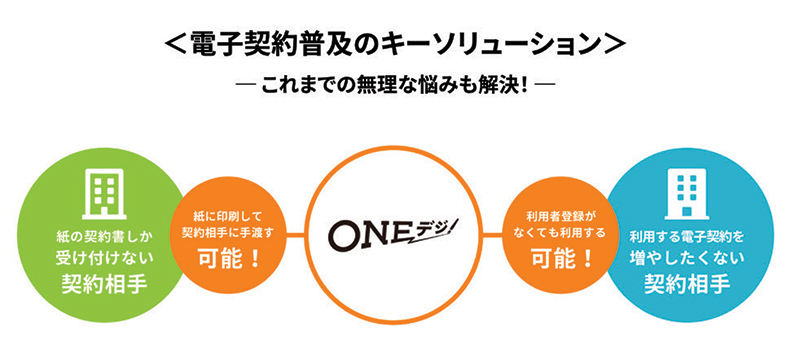
Its digital signature platform, ONEデジ (OneDIGI), binds each approval to a single, traceable signing event. It then packages the evidence needed to verify that event far into the future. Security controls aligned with recognized digital-signature standards establish legal credibility at the moment of creation. Tamper-evident timestamping anchors document state at signing. Blockchain-anchored verification records subsequent validation events. This approach supports long-term validation even as technology environments and cryptographic expectations evolve. The resulting evidence remains verifiable across systems.
“We draw a clear line between human approval and synthetic output,” Ogura adds. “When organizations cannot tell one from the other, documents that support commerce, contracts, invoices, certifications and archives stop acting like assets. Our job is to keep that line clear.”
This infrastructure-first view of digital proof is reflected in Le-Techs’ recognition as CIOReview APAC’s Top Electronic Signature Technology. Le-Techs frames electronic signatures as a foundation for evidentiary certainty and financial credibility.

An Architecture that Starts with a Different Definition of a Signature
OneDIGI’s success begins with a simple architectural decision: separating proof from the file.
Instead of relying on conventional PKI models, OneDIGI uses a one-time digital signature mechanism built explicitly on Winternitz One-Time Signatures (WOTS) and Merkle Signature Schemes. These hash-based approaches underpin post-quantum standards such as SPHINCS+ (SLH-DSA), standardized by the National Institute of Standards and Technology.
OneDIGI positions itself as the ‘Attestor of Human Origin.’ With OneDIGI, they are creating a cryptographic checkpoint that says, ‘A human consciousness reviewed and authorized this specific state of information.
“Standard encryption creates a ‘ticking time bomb’ for long-term records. Because RSA and Elliptic Curve signatures rely on mathematical problems that quantum computers solve instantly, any document signed today can be retroactively forged tomorrow,” adds Ogura. “We’ve replaced those vulnerable mathematical puzzles with one-time cryptographic hashes. By separating the proof from the file, we ensure that a signature captured today cannot be reverse-engineered 10 years from now.”
OneDIGI is format-agnostic and can apply digital signatures to Microsoft Word documents, Excel spreadsheets, PowerPoint files, images or any data file. Conventional solutions typically lock users into PDF workflows with invisible embedded signatures. This broad compatibility allows deployment across diverse business sectors and document types.
How It Works: External Ledgers and Continuous Chains
When an individual or organization signs a document, the system generates a cryptographic hash representing the exact state of that information at that moment. Instead of embedding the signature in the file, OneDIGI records the hash externally in a tamper-evident ledger and links it to the document via a visible QR code.
The system generates a fresh, one-time signature code for each signing event. This eliminates the risk of key compromise and removes the need for expensive third-party Certificate Authority operations.
Each subsequent action—revision, approval, transfer or endorsement—creates a new hash that incorporates the previous one. Over time, this forms a continuous chain of cryptographic evidence that records the entire evolution of the agreement, step by step, as it changes hands and context over time.
Because every state of the document is mathematically linked to the next, altering a record retroactively would require reversing every hash that follows, a task that remains computationally infeasible even under future quantum threat models.
Blockchain Anchoring: Three Layers of Protection
The final hash of each signed document is written to the blockchain within minutes. This creates three layers of protection.
First, decentralization ensures survival. The proof exists independently of Le-Techs. Even if the company ceases to exist, the blockchain record remains verifiable.
Second, immutability guarantees integrity. Data on a distributed ledger is extremely tamper-resistant. Once a signature record is on the chain, it cannot be falsified or changed.
Third, temporal certainty creates legal advantage. The blockchain provides an indisputable timestamp, critical for proving priority in intellectual property or patent disputes, a key market in the US and Asian tech sectors.
This stands in stark contrast to competitors like Adobe Sign, which maintain audit trails in centralized SQL databases. If Adobe were compromised, subpoenaed or coerced, that log could be altered.
Verification with Visible Signatures and Layered Authentication
When a signature needs verification, the system uses the signature’s unique code to retrieve first-layer data systematically, then second-layer data, ultimately locating the original document and verifying its authenticity by comparing hashes. This hierarchical verification process ensures that the document corresponding to a given signature is the exact original and has not been tampered with, even when stored externally.
Information about who signed and when is recorded in the backend system and can be retrieved by scanning the code. Because the signature is visible on the page, even a printed copy of the document can be verified. This enables physical document handling and intuitive visual confirmation, which was difficult with traditional invisible digital signatures.
“OneDIGI positions itself as the ‘Attestor of Human Origin,’” says Ogura. “With OneDIGI, they are creating a cryptographic checkpoint that says, ‘A human consciousness reviewed and authorized this specific state of information.’”
Signatures that Survive Print, Borders and Systems
OneDIGI’s underlying architecture enables an expanding suite of services that carry trust across documents, workflows and industries where digital transformation remains incomplete.
At the application layer, this architecture supports distinct but connected services. OneDIGI Document applies one-time digital signatures to legal agreements, allowing contracts to remain verifiable even after printing. OneDIGI Certificate extends the same trust model to official records such as diplomas, employment certificates, medical reports and test results, replacing paper credentials with digital equivalents that retain evidentiary value. OneDIGI Invoice applies cryptographic proof to invoices, strengthening integrity and non-repudiation in financial exchanges where authenticity directly affects compliance and payment confidence. Through the OneDIGI API, these capabilities are embedded directly into enterprise systems, allowing organizations to adopt the model without rebuilding their workflows.
This flexibility addresses real operational challenges across sectors where context, custody and continuity matter as much as the signature itself.
In supply chains, it solves the ‘phygital disconnect’ plaguing logistics, construction and customs operations in Asia and the U.S. The visible QR code signature allows a site manager in Tokyo or a customs officer in Singapore to scan physical paper and instantly verify blockchain records.
In finance, it converts invoices into liquid instruments by integrating with Japan’s Electronically Recorded Monetary Claims (Densai) system. When a user signs a contract or invoice, the system triggers creation of an Electronic Receivables Management Certificate (ERMC), legally establishing a debt obligation (Hassei Kiroku), enabling electronic transfer to banks or factors (Joto Kiroku) and automating payment settlement (Shiharai). The Act grants what U.S. audiences might recognize as ‘digital UCC filing on steroids.’ Third parties acquiring claims in good faith cannot be blocked by supplier disputes (Jinteki Koben no Setsudan), making these assets highly liquid and low risk. Unlike DocuSign, which requires separate manual financing processes, OneDIGI integrates financing capabilities into the signature itself, a blue-ocean strategy that addresses significant APAC SME financing gaps.
The same architecture supports cross-border operability. The blockchain tokenization model complies with UNCITRAL’s Model Law on Electronic Transferable Records (MLETR), which requires systems to provide reliable methods for establishing exclusive control of electronic records. This positions the platform for markets already adopting the standard, such as Singapore (Electronic Transactions Amendment Act 2021), Hong Kong (trade finance digitalization), the UK (Electronic Trade Documents Act 2023) and the U.S. (proposed UCC Article 12 amendments).
The continuous chain in government workflows preserves both approvals and the context and rationale behind each decision, addressing transparency gaps in public-sector record-keeping. In February 2024, Japan’s Digital Agency and five ministries confirmed OneDIGI as a valid electronic signature technology for public sector use.
Looking ahead, organizations no longer face the question of whether documents can move faster or whether processes can be further digitalized. The question is whether critical records can remain credible in environments shaped by automation, regulation and long-term horizons. OneDIGI answers that question by treating trust as something that must endure the test of time.
When an individual or organization signs a document, the system generates a cryptographic hash representing the exact state of that information at that moment. Instead of embedding the signature in the file, OneDIGI records the hash externally in a tamper-evident ledger and links it to the document via a visible QR code.
The system generates a fresh, one-time signature code for each signing event. This eliminates the risk of key compromise and removes the need for expensive third-party Certificate Authority operations.
Each subsequent action—revision, approval, transfer or endorsement—creates a new hash that incorporates the previous one. Over time, this forms a continuous chain of cryptographic evidence that records the entire evolution of the agreement, step by step, as it changes hands and context over time.
Because every state of the document is mathematically linked to the next, altering a record retroactively would require reversing every hash that follows, a task that remains computationally infeasible even under future quantum threat models.
Blockchain Anchoring: Three Layers of Protection
The final hash of each signed document is written to the blockchain within minutes. This creates three layers of protection.
First, decentralization ensures survival. The proof exists independently of Le-Techs. Even if the company ceases to exist, the blockchain record remains verifiable.
Second, immutability guarantees integrity. Data on a distributed ledger is extremely tamper-resistant. Once a signature record is on the chain, it cannot be falsified or changed.
Third, temporal certainty creates legal advantage. The blockchain provides an indisputable timestamp, critical for proving priority in intellectual property or patent disputes, a key market in the US and Asian tech sectors.
This stands in stark contrast to competitors like Adobe Sign, which maintain audit trails in centralized SQL databases. If Adobe were compromised, subpoenaed or coerced, that log could be altered.
Verification with Visible Signatures and Layered Authentication
When a signature needs verification, the system uses the signature’s unique code to retrieve first-layer data systematically, then second-layer data, ultimately locating the original document and verifying its authenticity by comparing hashes. This hierarchical verification process ensures that the document corresponding to a given signature is the exact original and has not been tampered with, even when stored externally.
-
We draw a clear line between human approval and synthetic output. When organizations cannot tell one from the other, documents that support commerce, contracts, invoices, certifications and archives stop acting like assets. Our job is to keep that line clear.
Information about who signed and when is recorded in the backend system and can be retrieved by scanning the code. Because the signature is visible on the page, even a printed copy of the document can be verified. This enables physical document handling and intuitive visual confirmation, which was difficult with traditional invisible digital signatures.
“OneDIGI positions itself as the ‘Attestor of Human Origin,’” says Ogura. “With OneDIGI, they are creating a cryptographic checkpoint that says, ‘A human consciousness reviewed and authorized this specific state of information.’”
Signatures that Survive Print, Borders and Systems
OneDIGI’s underlying architecture enables an expanding suite of services that carry trust across documents, workflows and industries where digital transformation remains incomplete.
At the application layer, this architecture supports distinct but connected services. OneDIGI Document applies one-time digital signatures to legal agreements, allowing contracts to remain verifiable even after printing. OneDIGI Certificate extends the same trust model to official records such as diplomas, employment certificates, medical reports and test results, replacing paper credentials with digital equivalents that retain evidentiary value. OneDIGI Invoice applies cryptographic proof to invoices, strengthening integrity and non-repudiation in financial exchanges where authenticity directly affects compliance and payment confidence. Through the OneDIGI API, these capabilities are embedded directly into enterprise systems, allowing organizations to adopt the model without rebuilding their workflows.
This flexibility addresses real operational challenges across sectors where context, custody and continuity matter as much as the signature itself.
In supply chains, it solves the ‘phygital disconnect’ plaguing logistics, construction and customs operations in Asia and the U.S. The visible QR code signature allows a site manager in Tokyo or a customs officer in Singapore to scan physical paper and instantly verify blockchain records.
In finance, it converts invoices into liquid instruments by integrating with Japan’s Electronically Recorded Monetary Claims (Densai) system. When a user signs a contract or invoice, the system triggers creation of an Electronic Receivables Management Certificate (ERMC), legally establishing a debt obligation (Hassei Kiroku), enabling electronic transfer to banks or factors (Joto Kiroku) and automating payment settlement (Shiharai). The Act grants what U.S. audiences might recognize as ‘digital UCC filing on steroids.’ Third parties acquiring claims in good faith cannot be blocked by supplier disputes (Jinteki Koben no Setsudan), making these assets highly liquid and low risk. Unlike DocuSign, which requires separate manual financing processes, OneDIGI integrates financing capabilities into the signature itself, a blue-ocean strategy that addresses significant APAC SME financing gaps.
The same architecture supports cross-border operability. The blockchain tokenization model complies with UNCITRAL’s Model Law on Electronic Transferable Records (MLETR), which requires systems to provide reliable methods for establishing exclusive control of electronic records. This positions the platform for markets already adopting the standard, such as Singapore (Electronic Transactions Amendment Act 2021), Hong Kong (trade finance digitalization), the UK (Electronic Trade Documents Act 2023) and the U.S. (proposed UCC Article 12 amendments).
The continuous chain in government workflows preserves both approvals and the context and rationale behind each decision, addressing transparency gaps in public-sector record-keeping. In February 2024, Japan’s Digital Agency and five ministries confirmed OneDIGI as a valid electronic signature technology for public sector use.
Looking ahead, organizations no longer face the question of whether documents can move faster or whether processes can be further digitalized. The question is whether critical records can remain credible in environments shaped by automation, regulation and long-term horizons. OneDIGI answers that question by treating trust as something that must endure the test of time.
Establishing Trust In Electronic Signatures For Financial And Legal Systems
Electronic signatures have moved from administrative convenience to foundational infrastructure across financial and legal environments. Executives responsible for governance, compliance and long-horizon risk now face a different problem than speed or usability. The question is whether a signed document can continue to prove intent, integrity and authenticity over years of revision, transfer and scrutiny. Conventional approaches, largely built on public key infrastructure, were designed for static documents and short validation cycles. They struggle when documents evolve, when signatures must remain verifiable outside closed systems or when long-term evidentiary value matters as much as immediate execution.
In financial and legal technology, signature credibility depends on three intertwined qualities. The first is how proof is stored and validated over time. Systems that embed signature data directly into a file often fail when a document must be amended, reviewed or reissued, because each change disrupts the original proof. A more durable approach preserves a continuous record of signing activity that can be checked independently of the document’s current state. This becomes essential in regulated workflows where contracts, invoices or records are revisited years later.
The second quality is transparency of verification. Many electronic signatures remain invisible to human inspection, which creates friction when documents move outside purely digital channels. Legal and financial processes still involve printed materials, audits and third-party review. A signature model that allows verification from the document itself, without specialized tools or access to a closed platform, reduces ambiguity and lowers dispute risk. Visibility is not cosmetic; it determines whether trust survives real-world handling.
The third quality is economic and operational sustainability. Per-signature cost structures tied to certificate authorities can become material at scale, particularly for organizations processing large volumes of agreements or transactional records. Long-term security also matters. Systems dependent on static cryptographic keys concentrate risk over time, since compromise affects every document signed with that key.
Le-Techs addresses these challenges through its One-Time Digital Signature technology, branded as ONE Digi. Rather than embedding proof inside the document, it records signature data on an external ledger supported by blockchain technology. Each signing event generates a unique, one-time code linked to the document’s hash and timestamp. This allows the same document to be signed multiple times across its lifecycle while preserving a continuous, tamper-evident history of changes and approvals. Verification compares the current document state with ledger records, enabling confirmation even after revisions.
A visible signature element, typically expressed through a two-dimensional code placed on the document, allows verification from both digital and printed formats. Scanning this code retrieves the relevant ledger entry and confirms whether the document matches its recorded state. This approach bridges digital and physical workflows without weakening proof. It also avoids long-term private key reuse, since each signature event stands alone, reducing cumulative exposure and lowering operating cost by removing reliance on traditional certificate authorities.
The platform extends beyond contracts. Services such as document signing, digital certificates, electronic invoices and system integration through an API apply the same signature logic to different financial and legal artifacts. Each use case benefits from the same externalized proof, chained history and independent verification model, which aligns well with audit, compliance and dispute resolution requirements.
For organizations evaluating electronic signature technology in regulated environments, Le-Techs represents a disciplined, infrastructure-oriented choice. Its approach prioritizes durability of proof, clarity of verification and economic viability at scale. Executives seeking a signature system that supports evolving documents, hybrid workflows and long-term trust should view Le-Techs as a leading solution for financial and legal applications where the integrity of agreement matters long after the moment of signing.
...Read more
| Share this Article: Tweet
|
Company
Le-Techs
Management
Takashi Ogura, President and CEO
Description
Le-Techs is a Japan-based digital trust company providing legally compliant, tamper-proof electronic signatures, digital contracts, and certification solutions through its ONEデジ platform. Combining government-validated security standards with blockchain-backed verification, Le-Techs enables businesses, public institutions, and educational organizations to modernize document workflows—from digital contracts and invoices to long-term archival and API integrations—while reducing operational friction, strengthening compliance, and accelerating digital transformation.