

Korea Steno
The Human-Tech Infrastructure Powering Real-Time Transcription

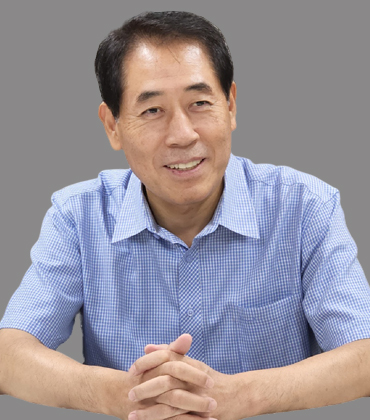 Seokyeon Shon, CEO
For three decades, Korea Steno has served South Korea’s most critical transcription needs with its real-time voice-to-text systems.
The nation’s leading voice-to-text conversion specialist stands out with its combination of proprietary software, advanced voice recognition technologies and trained human stenographers. Its experienced team builds high-accuracy, high-speed transcription systems for high-stakes use cases.
“Operating for a variety of customers since our establishment enables us to customize our voice-to-text solutions,” says Seokyeon Shon, CEO.
South Korea’s National Assembly, courts, prosecution services, major news broadcasters and global OTT platforms all rely on Korea Steno for accurate, instantaneous captioning and transcription. It commands approximately 70 percent of the domestic market for stenographic keyboards and closed-caption broadcasting.
Building a Category from the Ground Up
How has the company contributed to developing transcription technology milestones over time?
Korea Steno’s journey is marked by a series of industry-firsts.
It developed Korea’s first steno keyboard in 1994. A year later, it supplied these keyboards to the National Assembly. By 1999, it had launched the nation’s first closed caption broadcasting service for television audiences.
In 2026, Korea Steno achieved another milestone in sound-to-text conversion. It was tasked with providing real-time closed captions for a live concert streamed on a popular OTT service featuring prominent Korean artists. Its team decoded a complex mix of Korean and English dialogue to deliver live translations, song lyrics and contextual descriptions in a client-preferred format. The content ranked first in viewership in Korea on the day of the broadcast and the following day.
Customization that Drives Results with Reliable Tech
Why is customization essential for transcription systems across different operational contexts?
Captioning requirements differ widely depending on context, whether it is a news broadcast, a formal legislative proceeding, or a live entertainment event.
Korea Steno has built its reputation on addressing this nuance. It has developed highly customizable transcription systems that are adaptable across a wide range of environments. Elements such as speaker identification, formatting, tone and contextual interpretation are tailored precisely to each use case.
An integrated text-providing system that combines proprietary steno keyboards, computers, voice-to-text software and, wherever necessary, voice recognition technologies, makes this level of customization possible.
Korea Steno invests heavily in preventing setbacks to its system. Its approach prioritizes prevention over response, ensuring system stability before failures occur. Most of its systems are designed as standalone, self-sufficient units, often duplicated to minimize the possibility of interruptions and data leakage. Dedicated communication lines and uninterruptible power supply systems further protect against outages or disruptions. The result is unmatched service reliability.
Human Expertise for Greater Support
In what way does human expertise complement automated transcription systems for accuracy?
Despite advances in automation, Korea Steno places strong emphasis on human expertise. For each engagement, its team develops a custom operational manual to ensure consistency in text output. Quality is continuously monitored through structured sampling and evaluation by department heads.
Equally rigorous is its talent development. Korea Steno has collaborated with stenographer training institutions nationwide, and now operates its own training programs. New employees undergo a comprehensive two-year evaluation process, including performance assessments in live environments and peer and managerial reviews.
To ensure quality and speed, Korea Steno assigns trained professionals to handle transcription and correction in the same service unit. Dedicated software further enables multiple operators to work seamlessly on a single platform, reducing latency and internal errors.
Sustaining Industry Leadership in a Changing Market
As the need for voice-to-text services expands, the expectations for fast, precise transcription with contextual intelligence are rising.
Korea Steno looks forward to delivering on these expectations with continuous research and development on voice and video input, textualization, data processing and transmission. Collaboration with external partners, alongside internal innovation, ensures that the firm stays aligned with emerging technologies and evolving client requirements.
With a proven track record across government, media and global platforms, Korea Steno will continue to play a crucial role in advancing transcription services with its accuracy, speed and reliability.
Why is customization essential for transcription systems across different operational contexts?
Captioning requirements differ widely depending on context, whether it is a news broadcast, a formal legislative proceeding, or a live entertainment event.
Korea Steno has built its reputation on addressing this nuance. It has developed highly customizable transcription systems that are adaptable across a wide range of environments. Elements such as speaker identification, formatting, tone and contextual interpretation are tailored precisely to each use case.
-
Operating for a variety of customers since our establishment enables us to customize our voice-to-text solutions.
An integrated text-providing system that combines proprietary steno keyboards, computers, voice-to-text software and, wherever necessary, voice recognition technologies, makes this level of customization possible.
Korea Steno invests heavily in preventing setbacks to its system. Its approach prioritizes prevention over response, ensuring system stability before failures occur. Most of its systems are designed as standalone, self-sufficient units, often duplicated to minimize the possibility of interruptions and data leakage. Dedicated communication lines and uninterruptible power supply systems further protect against outages or disruptions. The result is unmatched service reliability.
Human Expertise for Greater Support
In what way does human expertise complement automated transcription systems for accuracy?
Despite advances in automation, Korea Steno places strong emphasis on human expertise. For each engagement, its team develops a custom operational manual to ensure consistency in text output. Quality is continuously monitored through structured sampling and evaluation by department heads.
Equally rigorous is its talent development. Korea Steno has collaborated with stenographer training institutions nationwide, and now operates its own training programs. New employees undergo a comprehensive two-year evaluation process, including performance assessments in live environments and peer and managerial reviews.
To ensure quality and speed, Korea Steno assigns trained professionals to handle transcription and correction in the same service unit. Dedicated software further enables multiple operators to work seamlessly on a single platform, reducing latency and internal errors.
Sustaining Industry Leadership in a Changing Market
As the need for voice-to-text services expands, the expectations for fast, precise transcription with contextual intelligence are rising.
Korea Steno looks forward to delivering on these expectations with continuous research and development on voice and video input, textualization, data processing and transmission. Collaboration with external partners, alongside internal innovation, ensures that the firm stays aligned with emerging technologies and evolving client requirements.
With a proven track record across government, media and global platforms, Korea Steno will continue to play a crucial role in advancing transcription services with its accuracy, speed and reliability.
Precision and Continuity in Modern Transcription Services
Voice-to-text and transcription services have moved from back-office utilities to critical infrastructure supporting media, governance and enterprise communication. Executives evaluating providers face a shift in expectations, where speed alone no longer defines value. The growing diversity of use cases, from live broadcasting to institutional documentation, has elevated the importance of contextual accuracy, consistency of output and uninterrupted delivery under real-time conditions.
One defining pressure comes from the variability of application environments. Transcription in a legislative setting differs sharply from captioning a live broadcast or documenting multilingual events. The ability to adapt formatting, speaker distinction and linguistic nuance to each context determines whether text output is usable or merely approximate. Buyers increasingly prioritize providers that demonstrate not just technical capability but a disciplined approach to tailoring outputs based on end-use requirements. Standardized outputs that ignore situational nuance often create downstream inefficiencies, forcing internal teams to correct or reinterpret text that should have been accurate at the source.
Reliability under continuous operation presents another decisive concern. Real-time transcription environments tolerate little disruption, particularly in broadcasting or public sector use where delays or outages carry reputational and operational consequences. Systems that rely on single-threaded processes or minimal redundancy introduce risk that becomes visible only when failure occurs. Leading providers mitigate this through system duplication, isolated service units and preparedness for contingencies such as power interruptions. Continuity, in this context, is less about recovery after failure and more about eliminating the conditions that allow disruption to occur in the first place.
Accuracy, often treated as a baseline expectation, becomes more complex under live conditions where latency must be minimized without compromising textual integrity. The interplay between human expertise and assistive technologies defines performance here. Pure automation may reduce delay but often sacrifices nuance, especially in multilingual or dynamic conversational settings. Conversely, purely manual approaches can struggle with speed at scale. The most effective solutions integrate trained specialists with supportive tools, enabling simultaneous processing, correction and validation within a unified workflow. This balance ensures that accuracy is maintained even as timing constraints tighten.
Consistency across engagements also emerges as a differentiator. Organizations consuming transcription services at scale require outputs that align with internal standards across multiple sessions and teams. Providers that formalize client-specific guidelines and embed them into delivery processes create a predictable experience that reduces friction for end users. This consistency is not incidental; it is sustained through structured onboarding, ongoing quality evaluation and workforce development that reinforces adherence to defined standards over time.
Korea Steno represents a mature implementation of these principles within the voice-to-text and transcription domain. Its long-standing engagement with broadcasters, government institutions and global streaming platforms reflects an ability to adapt outputs to varied contexts while maintaining uniform quality. The company’s system architecture emphasizes continuity through duplicated service units and contingency planning, reducing the likelihood of service interruption. Its delivery model combines trained stenographers with integrated software workflows, enabling real-time processing with controlled latency and sustained accuracy. Continued investment in training, evaluation and technology integration supports consistent performance across engagements, positioning it as a dependable choice for organizations where precision and continuity are non-negotiable.
...Read more
| Share this Article: Tweet
|
Company
Korea Steno
Management
Seokyeon Shon, CEO
Description
Korea Steno provides stenographic keyboards, closed captioning and real-time voice-to-text and transcription services for South Korea’s National Assembly, news and government agencies and global OTT platforms. It offers customized transcription formats for news broadcasts, live events, OTT shows and institutional proceedings with its proprietary voice-to-text software, voice recognition technologies and trained human stenographers.
