

eightis
Making the Expert Eye Reproducible

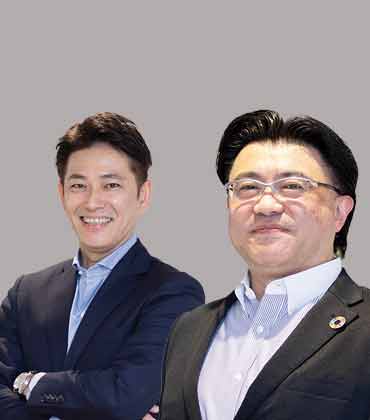 Kazuchika Nakamura, Founder, Representative Director and CEO and Koyo Takahashi, Senior Managing Director and CFO
The difficulty is that one expert practitioner may read a body differently from another. An organization may have exceptional specialists at one site and none at another. Scale introduces variation precisely where consistency matters most.
Japanese software company eightis set out to make that expert judgment reproducible and more widely accessible.
Its answer is shintai, an AI-powered system that encodes the assessment logic of elite practitioners, effectively digitizing their expert eyes. Running on an iOS smartphone, it turns markerless 3D posture and movement analysis into a repeatable process that moves from observation to specific corrective action. The workflow is end-to-end in one application.
Conventional motion-capture systems depend on markers, multiple cameras or dedicated environments. shintai requires no proprietary hardware or specialized room. A standard smartphone captures the body and the system analyzes over 100 anatomical sites in about 20 seconds. The technology provides the speed; the judgment encoded within it is what gives the system its value.
“The gap between a measurement and a decision is where expertise has always lived and it is the gap we set out to close,” says Kazuchika Nakamura, founder, representative director and CEO.
Finding Judgment Worth Reproducing
Nakamura spent more than a decade searching for practitioners whose assessments consistently held up. He visited over 1,000 leading trainers before narrowing the group to 30. Reputation was not enough. He looked for demonstrated excellence, but reproducibility mattered just as much. He checked whether the same practitioner reached the same reading on separate occasions, whether members of the group converged on similar assessments and whether the subsequent interventions produced reliable results.
“Selecting for consistency at the source is what makes consistency achievable downstream,” says Koyo Takahashi, senior managing director and CFO.
The portfolio approach followed by Nakamura meant looking for temperament: whether practitioners could work as part of a larger system. Complex physical issues often require knowledge from multiple specialties. He selected practitioners who could work from a shared reading of the body, recognize when another specialist was better suited to a problem and contribute to a team assembled around a specific assessment.
Those 30 practitioners defined the observation points that drive their assessments and personally annotated the training data. The task was not delegated to general-purpose annotators. The practitioners whose judgment eightis wanted to systematize determined what the system should observe.
shintai, however, isn’t built to compete with expert practitioners. It’s built to capture their assessment judgment and make it repeatable. Its claim is more specific. The platform consistently applies the logic encoded by those practitioners and reduces the variation that enters human judgment through fatigue, workload, environment or different operators. For organizations trying to offer assessment across multiple employees, members, athletes or locations, that consistency changes the operating model.
A Course of Action, Not a Report
Reproducibility would mean little if the system stopped at identifying asymmetry. shintai connects what it sees to what happens next.
It evaluates more than static posture in frontal and sagittal views. Emphasis is placed on rotation and torsion because stress in one area may be influenced by how another area is positioned or moving. By reconstructing 3D relationships from smartphone-captured data, shintai incorporates rotational patterns into the assessment.
Once it visualizes a user’s condition, the system proposes self-exercises tailored to the identified alignment issues. It generates corrective menus for working with free weights and machines, so the recommendations fit into an existing training program without requiring a separate regimen. It is a small design decision, but it has a large effect on whether the corrective work actually gets done.
The gap between a measurement and a decision is where expertise has always lived and it is the gap we set out to close.
“Precision without applicability produces a report that nobody acts on, so we designed the output as an instruction rather than as a document,” says Takahashi.
Visualization supports the transition from finding to action. A practitioner may explain that a pelvis is rotated or that a joint is carrying unwanted load, but the idea can remain abstract until a person sees it. shintai converts the assessment into a visual reference that the practitioner and user can examine together.
“The visual does persuasive work that a verbal explanation cannot,” says Takahashi.
At the organizational scale, the same visual and assessment logic creates a common reference point for all staff members. shintai Karte, the company’s B2B data layer, centralizes assessments, enabling organizations to track individuals over time and examine broader population trends. Because the capture protocol and assessment engine remain consistent, readings from different locations can be compared without requiring operators to re-interpret them. That is where posture analysis becomes infrastructure.
Removing the Hour-Long Bottleneck
Speed gives that infrastructure practical value. A detailed assessment by a senior trainer previously required about 30 minutes of movement observation, followed by another 30 minutes of evaluation. shintai completes its assessment in about 20 seconds. The meaningful change is not that software replaces expert knowledge. It’s in expert-derived assessment logic that no longer requires an hour of a specialist's attention each time someone needs to be evaluated.
A gym can introduce assessment without installing dedicated equipment. A sports organization can repeat measurements without tying each session to a single specialist. A corporate wellness program or care setting can create a consistent starting point, even where expert practitioners are not available.
Deployment follows the same principle: because shintai runs on a standard iOS smartphone, organizations can scale without purchasing, shipping or maintaining hardware. New locations can be added through accounts, while assessments are stored in a centralized database. eightis holds ISO/IEC 27001 certification, which governs how those records are stored and handled.
“What set the best trainers apart was the precision of their assessment. They understood the body's state and identified the root cause before intervening. But that precision lived in a handful of individuals. Our work is to make it available far beyond them,” says Nakamura.
Before shintai: The Case That Became the Blueprint
In December 2012, years before shintai existed, Japanese footballer Masashi Nakayama retired after knee osteoarthritis progressed to the point where walking was affected. Joint replacement had been recommended to address the knee and achieve pain relief and restoration of everyday function.
Nakamura saw another question worth examining: How was the rest of Nakayama’s body loading the affected joint?
The two had never met. After watching Nakayama’s retirement press conference, in which he acknowledged that he had not made peace with the decision, Nakamura worked through acquaintances to secure an introduction. He proposed a route back on an explicit premise: the objective was a return to playing, not the management of symptoms. He then conducted a full-body assessment, looking beyond the knee to understand the alignment, rotation and movement patterns affecting it.
Rather than assembling a standard team, Nakamura selected seven specialists relevant to the specific deficits he had identified. Three focused on movement correction, two on releasing joint contracture, one on soft-tissue release and one on neural-pathway facilitation. Each had a defined role based on the reading of Nakayama’s body.
Nakayama returned to competitive football in 2015, at age 47.
shintai played no role in that rehabilitation. The platform did not yet exist. The case gave Nakamura a practical demonstration of how much depended on the quality of the assessment preceding an intervention. It also exposed the limitations of that model. The reading required rare expertise, considerable time and direct access to the practitioner capable of providing a high-quality assessment. For most people, the obstacle is not a shortage of treatment but the difficulty of being assessed correctly in the first place.
Years later, eightis captured that assessment logic in a form that did not depend on one expert being physically present.
On 26 September 2026, nearly 14 years after his first retirement in 2012, Nakayama experienced shintai for the first time. Seeing the assessment made the value of understanding his own body tangible.
“If I had this when I was playing, I might have been able to point my training in the right direction,” he said.
His observation captured the wider need that shintai addresses.
“Most people do not have a trainer. So that things do not get worse without them knowing, the first step is to know your own body. And if it is this easy and takes so little time, everyone should do it," adds Nakayama.
Taking the Method Beyond Elite Sport
eightis has since applied that assessment philosophy in settings far removed from professional athletics. At Tsukui No-no Aoyama, a serviced residence for older adults in Tokyo, an internal pilot beginning in 2020 combined assessment with corresponding rehabilitation. Over three months, eightis observed improvements in center-of-gravity balance and confirmed recovery of physical function among 15 participants. It was an internal pilot without a control group rather than clinical evidence.
Public exposure followed at Expo 2025 Osaka, Kansai. eightis was selected for the Osaka Healthcare Pavilion through a competitive process that began with a HeCNOS Award in the healthcare category and was followed by the Biosite Capital Prize. During its June 2025 exhibition in the Reborn Challenge program, more than 1,800 people experienced the system over the course of one week.
shintai began commercial trial operation at PITIN conditioning in February 2026 and at Pescadola Machida, a professional club in Japan’s F.League, in July 2026. eightis is extending the same assessment engine to older adults and children through shintai Senior and shintai Junior. It sees accumulated body data creating possibilities beyond assessment, including product development for conditioning apparel, bedding, seating and vehicle interiors.
eightis is also exploring how its understanding of joint alignment can move beyond software. The BAT Navigator is a Japanese-patented, pre-commercial, standalone device designed to correct joint alignment during movement. Where shintai identifies joints carrying loads they should not, BAT Navigator physically addresses alignment and works independently of a shintai assessment. As a software company, eightis does not intend to manufacture the device itself. It is seeking a commercialization partner, a manufacturer or distributor in conditioning equipment, orthopedic support or sportswear, and welcomes approaches from readers.
Both directions reflect the idea that shaped eightis from the beginning: expert knowledge becomes more valuable when it can travel beyond the individual practitioner. What one expert sees can become guidance that many people can access. This work earned eightis recognition with the Top 3D Posture Analysis Platforms in APAC 2026 award from CIOReview APAC.
“Our aim is a world where everyone can keep walking on their own feet for life, with the eye of a top trainer in the palm of their hand,” concludes Nakamura.
Deployment follows the same principle: because shintai runs on a standard iOS smartphone, organizations can scale without purchasing, shipping or maintaining hardware. New locations can be added through accounts, while assessments are stored in a centralized database. eightis holds ISO/IEC 27001 certification, which governs how those records are stored and handled.
“What set the best trainers apart was the precision of their assessment. They understood the body's state and identified the root cause before intervening. But that precision lived in a handful of individuals. Our work is to make it available far beyond them,” says Nakamura.
Before shintai: The Case That Became the Blueprint
In December 2012, years before shintai existed, Japanese footballer Masashi Nakayama retired after knee osteoarthritis progressed to the point where walking was affected. Joint replacement had been recommended to address the knee and achieve pain relief and restoration of everyday function.
Nakamura saw another question worth examining: How was the rest of Nakayama’s body loading the affected joint?
-
Our aim is a world where everyone can keep walking on their own feet for life, with the eye of a top trainer in the palm of their hand.
The two had never met. After watching Nakayama’s retirement press conference, in which he acknowledged that he had not made peace with the decision, Nakamura worked through acquaintances to secure an introduction. He proposed a route back on an explicit premise: the objective was a return to playing, not the management of symptoms. He then conducted a full-body assessment, looking beyond the knee to understand the alignment, rotation and movement patterns affecting it.
Rather than assembling a standard team, Nakamura selected seven specialists relevant to the specific deficits he had identified. Three focused on movement correction, two on releasing joint contracture, one on soft-tissue release and one on neural-pathway facilitation. Each had a defined role based on the reading of Nakayama’s body.
Nakayama returned to competitive football in 2015, at age 47.
shintai played no role in that rehabilitation. The platform did not yet exist. The case gave Nakamura a practical demonstration of how much depended on the quality of the assessment preceding an intervention. It also exposed the limitations of that model. The reading required rare expertise, considerable time and direct access to the practitioner capable of providing a high-quality assessment. For most people, the obstacle is not a shortage of treatment but the difficulty of being assessed correctly in the first place.
Years later, eightis captured that assessment logic in a form that did not depend on one expert being physically present.
On 26 September 2026, nearly 14 years after his first retirement in 2012, Nakayama experienced shintai for the first time. Seeing the assessment made the value of understanding his own body tangible.
“If I had this when I was playing, I might have been able to point my training in the right direction,” he said.
His observation captured the wider need that shintai addresses.
“Most people do not have a trainer. So that things do not get worse without them knowing, the first step is to know your own body. And if it is this easy and takes so little time, everyone should do it," adds Nakayama.
Taking the Method Beyond Elite Sport
eightis has since applied that assessment philosophy in settings far removed from professional athletics. At Tsukui No-no Aoyama, a serviced residence for older adults in Tokyo, an internal pilot beginning in 2020 combined assessment with corresponding rehabilitation. Over three months, eightis observed improvements in center-of-gravity balance and confirmed recovery of physical function among 15 participants. It was an internal pilot without a control group rather than clinical evidence.
Public exposure followed at Expo 2025 Osaka, Kansai. eightis was selected for the Osaka Healthcare Pavilion through a competitive process that began with a HeCNOS Award in the healthcare category and was followed by the Biosite Capital Prize. During its June 2025 exhibition in the Reborn Challenge program, more than 1,800 people experienced the system over the course of one week.
shintai began commercial trial operation at PITIN conditioning in February 2026 and at Pescadola Machida, a professional club in Japan’s F.League, in July 2026. eightis is extending the same assessment engine to older adults and children through shintai Senior and shintai Junior. It sees accumulated body data creating possibilities beyond assessment, including product development for conditioning apparel, bedding, seating and vehicle interiors.
eightis is also exploring how its understanding of joint alignment can move beyond software. The BAT Navigator is a Japanese-patented, pre-commercial, standalone device designed to correct joint alignment during movement. Where shintai identifies joints carrying loads they should not, BAT Navigator physically addresses alignment and works independently of a shintai assessment. As a software company, eightis does not intend to manufacture the device itself. It is seeking a commercialization partner, a manufacturer or distributor in conditioning equipment, orthopedic support or sportswear, and welcomes approaches from readers.
Both directions reflect the idea that shaped eightis from the beginning: expert knowledge becomes more valuable when it can travel beyond the individual practitioner. What one expert sees can become guidance that many people can access. This work earned eightis recognition with the Top 3D Posture Analysis Platforms in APAC 2026 award from CIOReview APAC.
“Our aim is a world where everyone can keep walking on their own feet for life, with the eye of a top trainer in the palm of their hand,” concludes Nakamura.
From Observation to Intervention: What Defines a Credible 3D Posture Analysis Platform
Across healthcare, sports performance and preventive wellness, musculoskeletal strain, whole body movement assessment and uneven rehabilitation results carry a recurring cost. Many rely on practitioner observation, separate imaging systems or movement scores that can change depending on who conducts the assessment. That inconsistency creates downstream problems in rehabilitation planning, training continuity and patient communication. Executive teams evaluating 3D posture analysis technology are no longer looking only for visual capture quality.
They want to know whether a platform helps practitioners turn biomechanical data into consistent decisions across locations and the people they serve. The aim is to give clinical and coaching judgment a more dependable foundation. Skeletal tracking has limited value when the same movement leads practitioners to different conclusions. Useful data helps teams understand potential risks, choose corrective steps and see whether those steps are working. Decision-makers also want faster assessments that retain enough detail to support sound judgment, especially where staff shortages or differences in experience slow the work.
Hardware complexity has also become a major purchasing constraint. A movement analysis system may work well in a pilot yet prove difficult to introduce across multiple locations. Extensive sensor setups, frequent calibration and disconnected software add time and cost at each site. Fitness chains, rehabilitation groups and elder-care providers need systems they can use without building specialized facilities around them. Smartphone-based capture makes that expansion more practical by reducing setup requirements and deployment costs. Centralized data visibility has become equally important. Executives want longitudinal physical data stored within unified dashboards rather than dispersed across disconnected tools, spreadsheets and practitioner notes.
“eightis’ system incorporates annotation logic developed by elite trainers, converting expert assessment patterns into scalable digital analysis capable of generating improvement recommendations within seconds.”
The strongest platforms also distinguish themselves through reproducibility Buyers want to know whose expertise informs an assessment and how that knowledge shapes its recommendations. Extensive annotated data grounded in established rehabilitation or performance methods gives those recommendations a firmer foundation. The reasoning also needs to be clear to the people using them. Patients are more likely to follow a program when they understand its purpose, while trainers need to see how small alignment adjustments could affect training load and recovery. Clear visuals help practitioners and trainers explain what they see, why they recommend a correction and what the person should work on.
Security and continuity remain central procurement concerns as physical data collection expands. Healthcare and performance organizations face rising pressure to maintain traceable data governance standards while supporting distributed access across clinics, facilities and training teams. Platforms that combine assessment, exercise recommendation and centralized record management within one environment reduce administrative fragmentation and simplify long-term oversight.
eightis aligns closely with these market expectations through its integration of AI-driven posture analysis, biomechanical interpretation and corrective exercise guidance within a single smartphone-based platform. Its system incorporates annotation logic developed by elite trainers, converting expert assessment patterns into scalable digital analysis capable of generating improvement recommendations within seconds. The company combines motion capture, visualization and individualized correction planning through its proprietary “shintai Karte” dashboard, allowing organizations to centralize physical assessment data while simplifying practitioner workflows. Its objective scoring and repeatable assessments help teams evaluate posture consistently, while easier deployment makes the technology practical across more locations. ISO 27001 certification also gives organizations greater confidence in how it manages and protects data over time.
...Read more
| Share this Article: Tweet
|

Company
eightis
Management
Kazuchika Nakamura, Founder, Representative Director and CEO and Koyo Takahashi, Senior Managing Director and CFO
Description
eightis transforms smartphone footage into markerless 3D posture and movement assessments, combining expert-informed decision logic with corrective exercise recommendations. Its shintai platform helps trainers, gyms, care facilities and corporate wellbeing programs deliver assessments without proprietary hardware or an on-site specialist.
