
CIOReview APAC Weekly Brief
Be first to read the latest tech news, Industry Leader's Insights, and CIO interviews of medium and large enterprises exclusively from CIOReview APAC
ESG regulations and market requirements are accelerating worldwide, with over 40 stock exchanges now requiring ESG disclosures as a listing rule, a shift that’s turning voluntary action into legal obligation. ESG regulations are fragmented, constantly evolving, and often conflicting. Internal teams usually lack the resources to keep up, and ESG data is scattered across reports and siloed systems, which makes compliance difficult. Traditional checklist-based consulting provides static frameworks and generic reports, offering little ongoing support. With limited capacity to track changes, companies often achieve only superficial compliance. A better approach starts by addressing real operational pain points, clarifying applicable regulations, assessing current performance, and identifying data gaps. It then creates a dynamic, industry-specific compliance baseline that evolves with regulations. In the ESG landscape, managing thousands of data points in a transparent and structured way is essential to meet growing regulatory and stakeholder demands. By unifying ESG data, this method enables real-time insights, easier disclosures, and continuous improvement. It helps companies move beyond simple box-checking and toward meaningful, lasting impact. This is exactly what i-ESG brings to the table. Unlike typical ESG startups, i-ESG did not begin as a consultancy or a software product searching for a market. It was developed inside a Fortune 500 company to solve the real-world challenges businesses face when trying to meet ESG expectations in a practical and strategic way. Instead of starting with abstract frameworks, the i-ESG team conducted over 100 interviews with business leaders to identify the actual pain points in ESG implementation. These insights informed a business-first approach focused not just on compliance, but also on clarity, risk mitigation, and long-term value. From there, the team built a scalable ESG data management platform to support the full ESG lifecycle. Its 6+ modules cover AI-powered ESG readiness assessment, materiality assessments, performance tracking through data-driven KPIs and benchmarks, and automated, audit-ready disclosures. By unifying standards, frameworks, and regulations including GRI, SASB, CSRD, and ISSB into one intelligent system, i-ESG streamlines compliance, enhances visibility, and enables consistent action.
Digital Magazine

Top SAP Change Management Service in APAC 2025
SAP ecosystems are known for being tightly coupled and intricately layered, where a single tweak can trigger a domino effect, making it crucial to understand the interdependencies. Implementing change here is rarely simple, as minor updates can have downstream impacts, even affecting overall system stability. And when every minute of downtime can cost millions, there’s no room for guesswork. That’s the kind of high-risk environment Rev-Trac Platinum was built to handle. For over 27 years, the company has stayed laser-focused on one mission: making SAP change management faster, safer and smarter. In 2019, one major utility company struggled with lengthy change implementation cycles, a multi-step process to implement, test, approve and deploy system updates that spanned three to four weeks. The company challenged Rev-Trac to reduce that timeline to just five days. The system they had was fragmented with handoffs between teams, manual approvals, testing delays and risk-prone transport coordination. By automating notifications, approvals, integration with testing tools and leading ITSM tools, Rev-Trac streamlined the entire lifecycle. Today, that same company consistently hits five-day turnaround times with fewer errors and stronger release control. This success is powered by Rev-Trac Platinum’s purpose-driven platform. Designed exclusively for SAP change management, Rev-Trac Platinum brings automation, governance and real-time visibility to a traditionally manual and risk-prone process.With decades of domain expertise, the company has evolved its solution to meet the ever-changing needs of global SAP users by streamlining complex workflows, reducing errors and helping organizations innovate without disruption. “We are the only organization solely dedicated to SAP change management,” says Daniel Clark, Product Manager. “That’s what gives our customers the confidence that when something goes wrong, it’s rarely unfamiliar territory. We’ve seen it before, and we already have the solution built into the product.”.


The world is at the edge of a productivity revolution. Appian, a software company that automates business processes, presents a universe of opportunities to organizations with the latest technologies like artificial intelligence (AI), process automation and data fabric to catalyze software development processes. Appian is a one-stop shop for designing, automating and optimizing even complex processes swiftly and seamlessly from start to finish. Providing advanced low-code technologies pushing the limits of comprehension and automation, it uses its stature and footprint in the industry to reveal where developer acceleration factors must steer next. Appian World 2024, the ultimate destination for the latest in AI, process automation and digital transformation, is creating a lot of excitement in the industry. The brightest minds from around the world share their strategies for end-to-end automation and process excellence. The momentous event is a full-fledged opportunity for developers and organizations to learn from the experts, showcase their success stories and build lasting connections with Appian leadership, customers and partners. Path to Accelerated Low-Code Application Development The Appian Platform is a single solution modern businesses need to improve workflows, unify data and streamline operations. It comprises data fabric, AI Copilot and a complete automation toolset. The platform helps users quickly innovate by visualizing and building applications 10x faster. Developer, whether beginners or experienced, are equipped with visual and intuitive low-code application design capabilities to build compatible apps just once and use them across any device or browser. Appian’s low-code application development innovation is highlighted by the introduction of the key elements of AI in its total technology proposition. It has integrated generative AI to help programmers build functionalities directly into apps. It ranks among the top enterprise low-code application platforms due to its low-code private AI that drives the use of generative AI and the Appian’s data fabric for easy AI integration into every business process. Key architectural components, including Appian’s patented SAIL and data fabric architecture, make it easy to leverage AI for faster delivery of powerful and secure end-to-end process automation solutions. Automation helps users quickly adapt processes based on shifting trends, demands and stakeholder needs. Leveraging the automation-first approach, Appian ensures seamless workflow. Loaded with Powerful Features Using Appian AI Skill Designer, the company is transforming process automation. It provides low-code design options to simplify AI development with a vision of democratizing low code advancements that deliver enhanced software development efficiency, cost-savings and improved decision-making. Numerous processes, including email communication and document classification and extraction, can be automated. Number one in the category of ‘Business Workflow Automation with Integration Use Case’ in the Gartner Critical Capabilities for Enterprise Low-Code Application Platforms, Appian accelerates app development to deliver business outcomes. It automates and composes B2E departmental and enterprise apps while digitizing, prototyping and innovating business. Developers can also use the platform to create multi-experience applications. Appian AI Skill Designer eliminates any need for data science skills and knowledge, enabling developers to build AI and machine learning models tailored to their requirements. By integrating sophisticated AI technologies into their digital workflows, businesses harness the complete potential of the platform. The technology focuses on classifying emails by interpreting details including the sender, level of business-critical content, sentiment and intent of the message. Businesses can automate email communications on a large scale, process and respond to customer inquiries quickly and ensure customer satisfaction..
CXO INSIGHTS

Optimizing Customer Experiences Through Data-Driven Strategies
Indra Hidayatullah, Data Management & Analytics Division Head, PT. Bank Tabungan Nega

Star Media Groups Strategic Move Towards a CDP: Optimising Audience Engagement in the Era of Data-Driven Decision Making
Kevin Seng, Senior General Manager, Technology, Star Media Group

Securing Digital Frontiers through Cyber Risk Management
Wahyu Agung Prasetyo, IT and Cyber Risk Management Head, Bank Mega

Performance Management
Raymund Chua, Senior Director, HR, ASIA & EMEA, OSI Systems

The Role of Business Intelligence in Shaping Real Estate Decisions at LJ Hooker
Mathew Tiller, Head of Research, Economics and Business Intelligence, LJ Hooker


IN FOCUS

Adapting to Change: SAP Management Strategies for APAC Enterprises
Enterprises across the Asia-Pacific (APAC) region are undergoing rapid digital transformation, making SAP change management services a critical component of successful system implementation and optimization. The complexity of modern SAP environments demands more than just technical execution. It requires structured approaches that address organizational readiness, user adoption, and process alignment. Effective change management ensures smooth transitions, minimal operational disruption, and strong stakeholder engagement to support strategic business goals. In response to this growing demand, top SAP partners are expanding their change management capabilities, offering specialized expertise to help organizations navigate complex transitions. Evolving Dynamics of SAP Change Management Across APAC The APAC region continues to witness a significant transformation in enterprise IT operations, with SAP change management services emerging as a key enabler in digital modernization. The demand for efficient change management is propelled by the widespread adoption of SAP systems across various industries, such as manufacturing, retail, telecommunications, and public services. As businesses integrate more advanced SAP solutions like S/4HANA and cloud-based applications, the emphasis on effective change management strategies has intensified. Organizations now prioritize smooth transitions that minimize disruption and ensure consistent operational performance. This has led to increased investments in structured SAP change management services to align enterprise objectives with technological progress. Key Barriers and Strategic Responses in Implementation Despite the growing recognition of SAP change management services, organizations in APAC often encounter several challenges during the implementation and transformation phases. A common issue is resistance to change among internal stakeholders, particularly when process redesigns or new system functionalities disrupt established routines. Successful service providers employ structured communication strategies and role-based training programs to address this. These approaches are designed to build end-user confidence, clarify the benefits of changes, and enhance system adoption across departments. A significant challenge stems from the complexity of managing SAP environments in multi-entity, multi-country enterprises. Differences in regulatory requirements, language, and organizational culture often complicate change management execution. This challenge is mitigated through tailored localization strategies, where SAP change initiatives are adapted to regional compliance standards and cultural nuances, ensuring smoother transitions and broader acceptance. Technical bottlenecks also pose obstacles, particularly when transitioning from legacy systems or integrating SAP with third-party solutions. Change management services increasingly incorporate early-stage impact assessments and sandbox testing. These measures help identify dependencies and risks, allowing for the refinement of system changes before full-scale deployment. Automation tools in transport management, version control, and audit tracking significantly reduce manual errors and support regulatory alignment. Stakeholder engagement is another area where challenges may emerge, especially in decentralized organizational structures. In these situations, inconsistent messaging and priorities can hinder alignment. The solution lies in establishing change networks, cross-functional teams of change agents and sponsors who advocate for and reinforce the transition across various departments and regions. These internal champions facilitate communication and monitor the effectiveness of the adoption process. Limited visibility into post-implementation outcomes often reduces the perceived value of change management efforts. This is countered through continuous feedback mechanisms and performance-tracking dashboards, which allow organizations to monitor adoption rates, identify pain points, and adjust strategies accordingly. Such real-time insights enhance the responsiveness of change initiatives and ensure that business objectives are met. Emerging Possibilities and Innovations Fueling Growth APAC's SAP change management landscape is rapidly advancing, presenting considerable opportunities for organizations aiming to future-proof their operations. Integrating artificial intelligence and machine learning into change management tools has revolutionized how enterprises manage transformation projects. Predictive analytics can now anticipate user adoption challenges, recommend personalized interventions, and automate repetitive change tasks, thereby improving efficiency and accuracy in execution. The increasing popularity of agile methodologies reshapes how SAP changes are planned and delivered. Instead of traditional waterfall approaches, iterative cycles enable faster response to business needs, improved stakeholder involvement, and more dynamic adaptation to shifting requirements. This agile-driven environment enhances organizational resilience and ensures that SAP systems evolve with strategic priorities. The expansion of cloud-based SAP solutions is also broadening the scope of change management services in APAC. As businesses migrate to the cloud, there is a rising demand for scalable and remote-friendly change strategies that accommodate hybrid work environments. Virtual training modules, cloud-native collaboration platforms, and real-time support services are now integral to change management frameworks, offering greater flexibility and user reach. Data-driven decision-making is increasingly becoming a key element in successful SAP change initiatives. By leveraging data visualization and user behavior analytics, change leaders can gain actionable insights into system performance and user engagement. These insights help fine-tune change strategies and reinforce user confidence, ultimately accelerating the return on investment from SAP transformations. Cross-industry collaboration is another area that is fostering advancement in the field. By adopting standardized best practices and sharing case studies across verticals, organizations in APAC benefit from a collective knowledge base that accelerates learning and reduces common pitfalls. Industry forums, digital learning hubs, and peer-to-peer support communities are instrumental in disseminating these innovations. The rise of a change-centric culture within enterprises is creating a lasting impact. Organizations that embrace continuous improvement, empower internal change champions, and prioritize transparent communication are better positioned to leverage the full potential of their SAP ecosystems. As this cultural shift gains momentum across the APAC region, it strengthens the strategic value of SAP change management services and aligns them with long-term organizational growth.
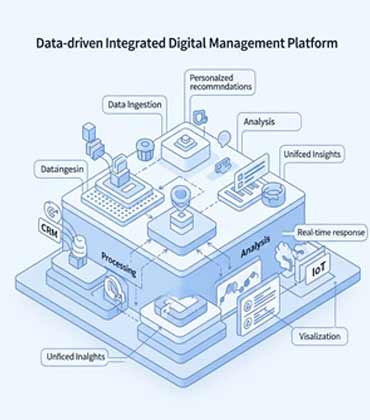
Fostering Growth in APAC: The Impact of Data-Driven Digital Solutions
The APAC region is undergoing a dynamic digital transformation, and one of the core enablers of this change is the growing reliance on data-driven integrated digital management platforms. Several pivotal factors contribute to this shift. The exponential growth in data generation across manufacturing, retail, healthcare, logistics, and public services has created a strong demand for platforms that can efficiently consolidate, manage, and extract actionable insights from large datasets. Governments in APAC countries are actively promoting digital infrastructure through initiatives. The programs emphasize the need for integrated digital solutions to streamline workflows, improve transparency, and enhance operational efficiency. Training programs, partnerships with academic institutions, and regional digital literacy campaigns are being rolled out to address the skill gap in data science and AI operations. The impact of these platforms is profound. They improve organizational efficiency and drive innovation and competitiveness. Streamlining workflows, improving decision-making accuracy, and enhancing responsiveness to market demands contribute to stronger business resilience. On a macroeconomic level, the widespread deployment of platforms supports national digital strategies, enhances GDP contributions from the tech sector, and improves service delivery across public and private domains. The widespread adoption of the platforms is not without challenges. Legacy systems pose a significant obstacle in digital transitions, particularly for small and medium enterprises that lack the budget or technical know-how to overhaul outdated infrastructure. The complexity of implementing AI models and the need for skilled personnel to manage them also hamper progress in developing nations within the APAC bloc. Transformative Factors Driving Adoption Businesses are increasingly pressured to optimize resources, minimize downtime, and improve their decision-making capabilities. An integrated platform that combines data management, analytics, automation, and performance monitoring enables companies to break data silos and coordinate activities across departments. The unified view leads to greater accountability, agile operations, and quicker responses to market changes. As cloud infrastructure becomes more accessible and secure in the region, enterprises are leaning toward scalable, cloud-based integrated platforms that support data mobility and security without compromising performance. Rising competition and the need for personalized customer experiences have compelled organizations to invest in solutions that enable a 360-degree view of customer journeys, supported by real-time analytics and feedback loops embedded in digital management systems. As organizations face mounting pressure to be agile, transparent, and customer-focused, the reliance on centralized, data-rich digital ecosystems will continue to intensify. AI and Emerging Trends Shaping the Platform Evolution Implementing AI has enhanced the value and capabilities of data-driven integrated digital management platforms. In APAC, companies embed AI-driven functionalities such as ML, predictive analytics, natural language processing, and robotic process automation to drive intelligent decisionmaking and automate repetitive workflows. AI allows platforms to learn from historical data, identify patterns, forecast future outcomes, and offer recommendations that align with business goals. The transformation empowers organizations to proactively address issues, optimize resource allocation, and enhance productivity. The most notable trend is the rise of AI-driven selfservice platforms, where users across departments can generate reports, conduct analyses, and interact with data without relying heavily on IT support. The democratization of data boosts employee engagement and fosters a datacentric culture. Another emerging trend is integrating IoT data streams with digital manufacturing, energy, and logistics management platforms. Real-time data from connected devices enables predictive maintenance, smart energy management, and supply chain optimization. Cloud-native architecture is becoming the standard in platform design. Organizations prefer modular, microservices-based platforms that can be easily integrated with existing systems and scaled as needed. The platforms offer agility, faster deployment, and lower total cost of ownership. Cybersecurity is being tightly embedded into the platform’s core framework. As governments and stakeholders push for greener digital transformation, sustainability is another influential trend. Platforms are equipped to monitor carbon footprints, optimize energy usage, and ensure compliance with sustainability mandates. Market Impact and the Growing Need The applications of data-driven integrated digital management platforms are vast and growing rapidly across the APAC region. In healthcare, such platforms are revolutionizing patient data management, diagnostics, and hospital administration by consolidating data across departments and facilities. In manufacturing, smart factories rely on these platforms for real-time monitoring, production planning, and quality control. Retail businesses leverage them to manage inventory, enhance supply chain visibility, and personalize customer engagement through data insights. In financial services, integrated platforms assist in fraud detection, customer onboarding, risk analysis, and regulatory compliance. Public sector bodies increasingly use them for urban planning, public health management, transportation systems, and innovative city initiatives. Educational institutions utilize these platforms for student management, e-learning content delivery, and performance analytics. Organizations must ensure compliance with stricter data protection regulations while managing cross-border data flows. Vendors and enterprises focus on user-centric design, low-code and no-code development frameworks, and robust integration APIs to enhance platform accessibility and adaptability. Government support through funding, tax incentives, and regulatory sandboxes is helping startups and mid-sized firms embrace digital management tools.
