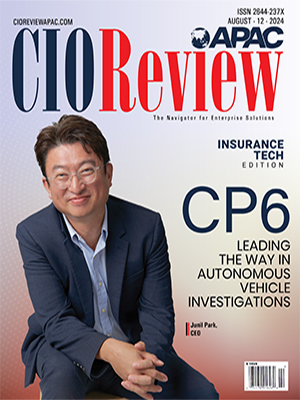
CP6
Leading the Way in Autonomous Vehicle Investigations

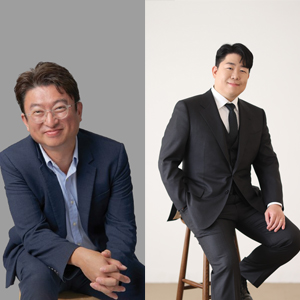 Junil Park, CEO and Jungho Lee, Team Leader
While this advancement represents progress, it also introduces increased complexity in traffic accident investigations, which presents an opportunity for improvement and innovation in handling such data.
In response to this challenge, CP6, a group of experts investigating and analyzing autonomous mobility accidents, developed the Automated-driving Car Accident Analysis Tool (ACAT). This innovative tool, accessible via a smartphone application, allows users to easily verify the accurate functioning of autonomous systems and gather crucial data from vehicle sensors. By streamlining the data collection and analysis process, ACAT not only aids in accident prevention but also improves overall driving safety.
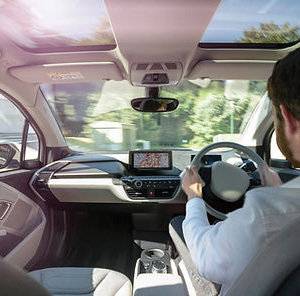
“Our goal is to provide tools that enhance safety and facilitate accurate and efficient accident investigations,” states Junil Park, CEO of CP6.
The role of ACAT extends into the insurance sector by providing a solid foundation for drafting crash reports. With its advanced data storage and analysis capabilities, ACAT helps ascertain driver involvement and detect potential malicious intent, enabling precise accident reconstruction. Such detailed insights are invaluable to insurance companies, as they enhance the accuracy of claims resolution and dispute settlement.
In addition, the insights garnered from ACAT’s data analysis are instrumental in helping insurance providers understand the risks associated with autonomous vehicles. This understanding allows them to tailor insurance premiums and design policies that reflect the proper safety and reliability of SDVs. ACAT also enhances the accuracy of insurance underwriting by analyzing policyholders’ driving behaviors.
ACAT is designed to comply with stringent safety regulations, including those set by the U.S. federal government, the Korean government, and the United Nations. It also provides fast and accurate analysis based on the Model Minimum Uniform Crash Reporting Criteria (MMUCC) established by the U.S. National Highway Traffic Safety Administration (NHTSA), ensuring that each analysis contributes to more transparent and effective accident investigations.
ACAT’s Role in the Future of Autonomous Driving
In South Korea’s bustling automotive market, where approximately 1.7 million vehicles roll out each year—98 percent of which are Level 2 or higher autonomy—ACAT plays a pivotal role. This innovative technology harnesses real-time sensor data to refine how insurance products are developed and renewed, offering a glimpse into the future of autonomous vehicle management.
However, the SDV revolution unveils many untapped opportunities, mainly through the vast influx of data from autonomous driving sensors. This data enhances safety and is a gateway to new revenue streams by developing tailored insurance products. It also helps devise targeted marketing strategies based on detailed analyses of driving behaviors, as highlighted in the Deloitte Insights (December 2023, Korea Report). Consequently, ACAT enhances accident investigation capabilities and drives innovation in insurance practices through advanced data utilization.
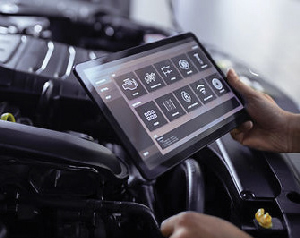
With a user-friendly interface, ACAT simplifies viewing and storing data from autonomous driving sensors. This functionality is crucial for maintaining vehicle safety and providing robust and accurate data to the authorities post-accident, mitigating driver dissatisfaction and ensuring fair compensation from insurance companies. “Current insurance models fail to capture the nuances of autonomous driving. By integrating ACAT, we can offer more precise, fair insurance products that truly reflect the risks and capabilities of autonomous vehicles,” explains Park.
With the rise of SDVs, it's imperative to tackle the new risks they bring. Our goal is to provide tools that not only enhance safety but facilitate accurate and efficient accident investigations
ACAT’s ability to provide real-time sensor data allows for precise risk assessments, leading to reliable and customized insurance products. This benefits insurers and offers peace of mind to drivers, knowing that their insurance is tailored to their vehicle’s performance and driving behavior.
ACAT’s Team Expanding Horizons
The team behind ACAT comprises experts in digital forensics, vehicle hacking, app security, and cryptography, ensuring that the technology is innovative and secure. The data gathered is stored securely within the app and can be backed up to the cloud with user consent, safeguarding against unauthorized access and tampering.
“Partnerships like the one with SK Shields are crucial for advancing our technology and ensuring that it meets the highest standards of safety and reliability. Through these collaborations we aim to making ACAT a global standard in autonomous driving data analysis”
ACAT represents a technological breakthrough that no existing competitor has been able to achieve, as evidenced by its recognition as the winner of the Edison Award 2024 in the transportation infrastructure category and its victory at the CES 2024 Vehicle Tech & Advanced Mobility Innovation Awards. The solution has also won the Grand Prize Award 2024 for digital innovation from the Ministry of Science and ICT, Government of Korea. These recognitions highlight ACAT’s technological advancement and its universal consumer appeal.
To further expand its market reach, CP6 is working with SK Shields, South Korea’s largest security company, as a technology development partner to identify and detect automotive cyber security risk data.
“Partnerships like the one with SK Shields are crucial for advancing our technology and ensuring that it meets the highest safety and reliability standards,” says JungHo Lee, Team Leader at CP6. “Through these collaborations, we aim to make ACAT a global standard in autonomous driving data analysis.”
CP6 is paving the way for ACAT to become a global solution for autonomous driving data collection and analysis by ensuring the tool complies with various regulatory standards. Designed to adhere to U.S. federal, Korean government and UN automotive safety regulations, ACAT is a reliable solution for accident prevention and investigation. It provides fast and accurate analysis based on the Model Minimum Uniform Crash Reporting Criteria (MMUCC), a standard set by the U.S. National Highway Traffic Safety Administration (NHTSA) to enhance the clarity of accident investigations.
ACAT’s capabilities extend beyond accident investigation and insurance claims. The tool can also be used for a variety of data utilization businesses. For instance, it can support the development of new insurance products based on autonomous driving sensor data or be used for marketing by analyzing driving behavior information. This aligns with the vision outlined in the Deloitte Insights report on the future of Software-Defined Vehicles, emphasizing the potential for new business models driven by data.
-
Current insurance models fail to capture the nuances of autonomous driving. By using ACAT, we can offer more accurate and fair insurance products that reflect the true risk and capabilities of autonomous vehicles
ACAT’s technology can be adapted for other modes of transportation in addition to its applications in the automotive industry. CP6 aims to extend its expertise to urban air mobility (UAM) and maritime autonomous surface ships (MASS), further establishing itself as a leader in autonomous vehicle safety and forensics.
Pioneering a Safer and Smarter Future
CP6’s ACAT is set to transform how autonomous vehicle accidents are investigated, and insurance claims are handled. By providing real-time, accurate sensor data, ACAT minimizes disputes between drivers, crash investigators, and insurers, ensuring a smoother and more transparent process.

“We are committed to advancing current technologies and contributing to developing an automotive-based data industry,” affirms Lee. By building on its expertise in autonomous vehicle safety and forensics, CP6 aims to become the leading authority in accident prevention and investigation for the next generation of transportation.
As autonomous vehicles evolve, ACAT will ensure a safer and smarter future for all. As envisioned in the Deloitte Insights report on SDVs, the tool can support a variety of data-driven business models. By capitalizing on this potential, CP6 is poised to make significant contributions to the automotive and broader transportation industries, ensuring that the future of mobility is safe and efficient.
| Share this Article: Tweet
|
Company
CP6
Management
Junil Park, CEO and Jungho Lee, Team Leader
Description
The CP6 is a team of experts investigating and analyzing autonomous mobility accidents. With a focus on self-driving cars, unmanned ships, UAM, and UTM using autonomous aviation functions, they provide solutions for insurance companies, investigative agencies, and normal users. ACAT, their tool, allows data acquisition and analysis from vehicle systems without specialized equipment and is designed for a wide range of applications, including crash reporting and autonomous feature verification.